
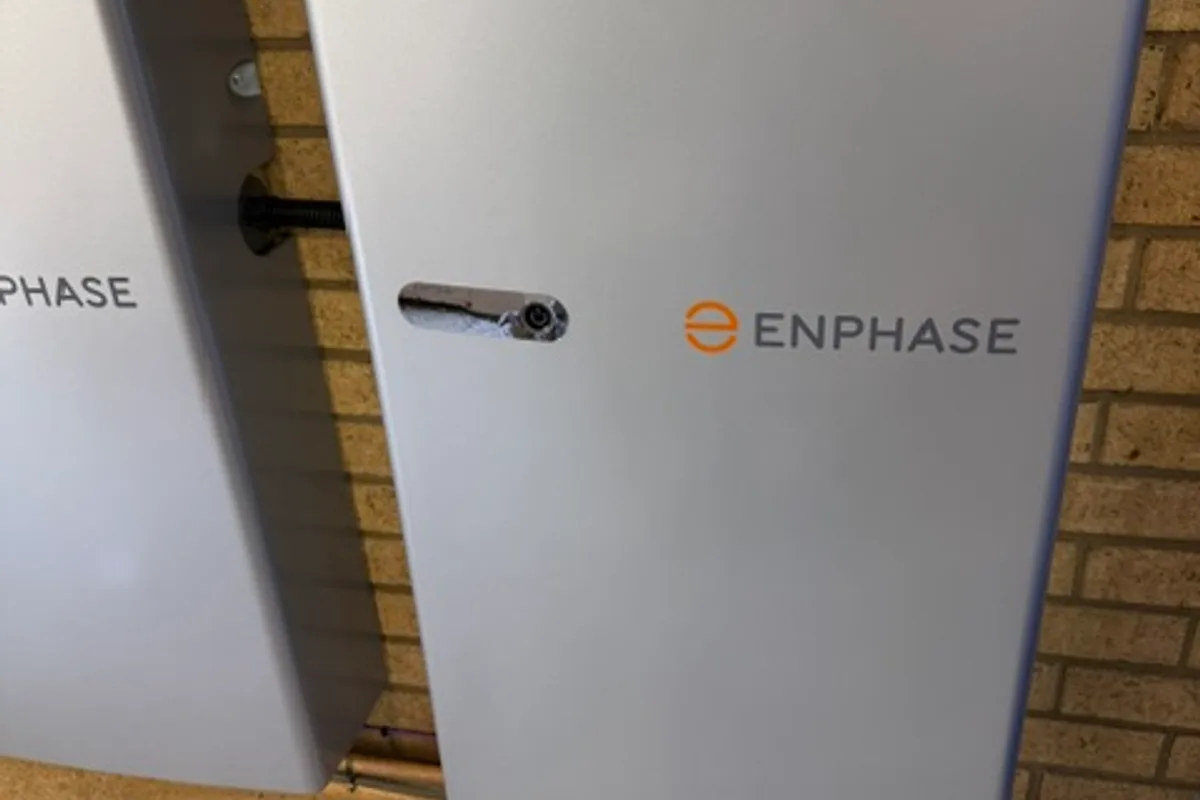
Battery Storage Installation in March, Cambridgeshire
Store your solar energy and use it at night. Fox ESS, Tesla Powerwall, and SolarEdge batteries installed by MCS-certified engineers — just 22 miles from our base. 0% VAT. Free survey.
Battery Storage in March
Adding panels at the same time? Our page on solar panel installation in March covers system sizes, 2026 prices and how the installation runs.
Battery storage lets you capture the solar electricity your panels generate during the day and use it in the evening, overnight, and on cloudy days — reducing your grid electricity use by 70–90%. In March, where average electricity bills run at £79/month, battery storage is one of the most impactful upgrades you can make.
70–90%
Self-sufficiency
£300–£600
Additional annual saving
7–9 years
Typical payback
Battery Costs and Savings in March
| Battery Size | System | Daily Self-Use | Annual Saving | Payback |
|---|---|---|---|---|
| 5 kWh | 4kW solar + 5kWh battery | 50–70% | £950–£1,250 | 6–8 years |
| 9.5 kWh | 4kW solar + 9.5kWh battery | 70–85% | £1,100–£1,500 | 7–9 years |
| 15 kWh | 6kW solar + 15kWh battery | 80–95% | £1,400–£1,900 | 7–10 years |
All prices include 0% VAT until March 2027. Savings based on 28p/kWh electricity and East Anglia average solar yield.
Battery Brands We Install in March
Fox ESS EVO
10 years warrantyCapacity: 5–10 kWh
LiFePO4, modular, 6,000+ cycles, smart tariff integration
Get a quoteTesla Powerwall 3
10 years warrantyCapacity: 13.5 kWh
11kW continuous output, 97.5% DC efficiency, built-in inverter
Get a quoteSolarEdge Energy Bank
10 years warrantyCapacity: 9.7–48.6 kWh
DC-coupled, pairs perfectly with SolarEdge inverters
Get a quotePylontech Force-H2
10 years warrantyCapacity: 7.1–14.2 kWh
8,000+ cycles, compatible with 35+ inverter brands
Get a quoteSmart Tariffs: Maximise Your Battery
With a smart electricity tariff like Octopus Agile or Flux, your battery charges automatically on cheap overnight electricity (typically 2–8p/kWh), then discharges during expensive peak hours (25–35p/kWh). This can add £200–£400/year in additional savings on top of the solar benefit.
How Battery Storage Works
Solar panels generate electricity during daylight
Your home uses what it needs in real time. Surplus electricity that would otherwise be exported to the grid is sent to the battery.
Battery stores surplus solar electricity
Modern lithium batteries are 95%+ efficient, retaining almost all the energy they receive. A 9.6kWh battery stores enough for a typical evening's use.
Battery discharges in the evening and overnight
As solar generation drops after 4–5pm, the battery automatically discharges to power your home. The grid only tops up when the battery is depleted.
Smart charging from overnight cheap-rate electricity
On smart tariffs, the battery can also charge from the grid during cheap overnight hours (typically 12am–5am at 7–15p/kWh).
Why March Is Ideal for Battery Storage
March sits in the heart of the Cambridgeshire Fens — one of the driest and flattest regions in England. The unobstructed horizon in all directions maximises solar exposure throughout the day. Higher solar generation means more surplus electricity available to store — making battery storage in March particularly cost-effective compared to areas with lower irradiance.
Local Grant Support in March
Cambridgeshire HUG2 scheme (Fenland District Council). PE15 eligible.
Battery storage qualifies for 0% VAT when installed alongside solar panels. We check your full grant eligibility during the free survey.
Why Choose Green Hat for Battery Storage in March?
March and the Fenland area have few dedicated local renewable energy providers. Most competitors are based in Cambridge or Peterborough. Green Hat offers direct Fenland access from our Isleham base and specialises in agricultural solar — critical for the food processing and farming economy around March.
- Agricultural solar expertise for packhouses, cold stores, and grain drying facilities
- Direct Fenland access: 22 miles from our base, often faster than Cambridge-based competitors
- Commercial solar experience for food processing factories on Hostmoor Avenue
- Full service: solar, battery storage, heat pumps, EV chargers under one roof
- Covering all PE15 postcodes and surrounding Fenland villages
Battery Storage Installation Timeline in March
March surveys booked within 7 days. Residential installations 3-5 weeks. Commercial food processing projects 6-10 weeks depending on scale and operational scheduling. Battery-only retrofits can often be scheduled faster — typically 2-3 weeks from survey to installation.
Battery Storage Coverage in March
Complete Home Energy System in March
Battery storage works best as part of a complete home energy system. Pair it with solar panels to capture free electricity, a heat pump to eliminate gas or oil heating, and an EV charger to drive on sunshine. In March, the combined system typically reduces total energy costs by 60-80% and cuts household carbon emissions by over 4 tonnes per year.
Frequently Asked Questions — Battery Storage in March
Do you install battery storage in March?
Yes. March is within our core service area, 22 miles from our Isleham base. We install Fox ESS, SolarEdge, and Tesla Powerwall battery storage systems for homes and businesses across March and the surrounding area.
How much does battery storage cost in March?
Battery storage in March typically costs £2,800–£6,500 installed, depending on capacity. A 5kWh battery costs approximately £2,800–£3,800. A 9.5kWh battery costs £4,000–£5,200. All installations include 0% VAT. When combined with solar panels, the total system cost is eligible for 0% VAT until March 2027.
Can I add a battery to my existing solar panels in March?
Yes. We retrofit battery storage to existing solar panel systems across March. We first assess your current inverter — if it is a hybrid-ready model (Fox ESS, SolarEdge, Huawei) a battery can be added directly. Older string inverters may require an AC-coupled battery such as the Tesla Powerwall. We assess this during your free survey.
How much can I save with battery storage in March?
A 9.5kWh battery added to a 4kW solar system in March typically saves an additional £300–£600 per year compared to solar alone, by capturing surplus daytime generation for evening and night use. With a smart tariff like Octopus Agile, savings increase further by charging the battery on cheap overnight electricity (typically 2–8p/kWh).
Is battery storage worth it in March?
Battery storage is most cost-effective when you already have or plan to install solar panels, have high evening electricity use, or can use a smart tariff. For most March homeowners with solar, battery storage reduces grid dependency to under 20%, with payback typically in 7–9 years. Properties with an EV also benefit significantly — battery-charged EV charging can cost as little as 2p/mile.
How long does battery storage installation take in March?
A battery storage installation typically takes 4–6 hours for a single unit. Combined solar and battery installations take 2–3 days. We can usually schedule March installations within 3–5 weeks of survey. Our proximity means we prioritise same-week callouts for March customers when availability allows.
What is the best battery for homes in March?
The Fox ESS EVO (5–10kWh) is our most-installed battery for March homes. It uses modular LiFePO4 chemistry with smart tariff integration and a 10-year warranty. For homes with existing SolarEdge inverters, the SolarEdge Energy Bank is the natural pairing. For backup power priority, Tesla Powerwall 3 leads the market. We recommend the right system based on your existing setup during the free survey.
Do I need planning permission for a battery in March?
No. Domestic battery storage systems are permitted development and do not require planning permission. There are no restrictions on battery storage in conservation areas or listed buildings (unlike solar panels, which may require consent for listed buildings). Batteries are typically installed in a garage, utility room, or purpose-built external cabinet.
Related Services in March
Renewables across Cambridgeshire — not just March
We work in March the same week we work in the rest of Cambridgeshire, from one base at Isleham. March is 22 miles from the workshop. We install East Anglia solar panel installers and our East Anglia heat pump service, and both pages set out exactly where our coverage stops.
Both regional pages list what we install, what it costs and where we will and will not travel. If March is not listed on them, it is still inside the radius — ask us about March and we will tell you straight whether the job is one we should be quoting.
Get Battery Storage in March — Free Survey
Get your free, no-obligation survey and personalised quote. Our MCS-certified team is ready to help you save money and reduce your carbon footprint.
Request a callback
Name and number is enough — we call within 24 hours.