
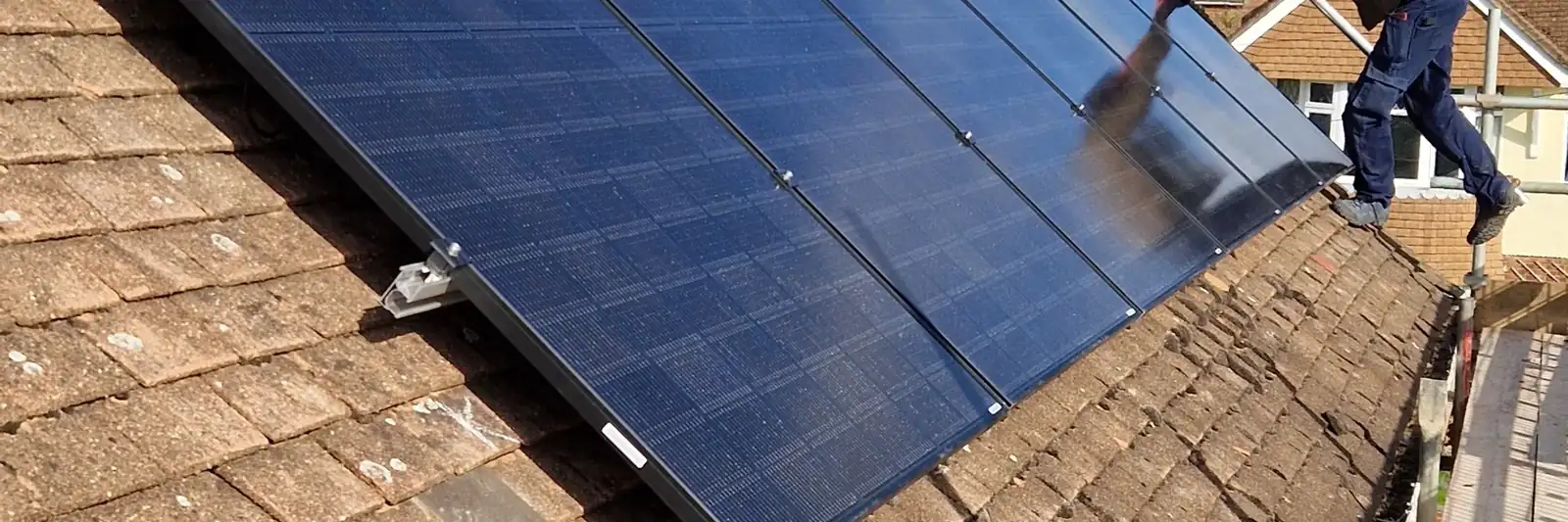
Solar Panels & Renewable Energy in Suffolk
MCS certified solar panel and renewable energy installers serving all of Suffolk. 397.5 MW of solar (DESNZ sum of 5 districts, end 2024) and growing rapidly.
Solar Panels in Suffolk
Adding up the DESNZ district figures for the end of 2024 gives Suffolk about 397.5 MW of solar capacity, and it continues to grow. The county's agricultural heritage, market towns, and the commercial hub of Ipswich provide excellent demand for renewable energy solutions across all sectors.
Adding up the DESNZ district figures for the end of 2024 gives Suffolk about 397.5 MW of solar capacity across 32,539 installations, reflecting strong uptake across its market towns, agricultural estates, and the commercial centres of Ipswich and Bury St Edmunds. The county's equine industry around Newmarket adds a distinctive demand for commercial-scale solar and heating.
Suffolk offers a mix of medieval timber-framed houses in towns like Lavenham and Long Melford, Victorian and Georgian properties in Bury St Edmunds and Ipswich, and modern developments on the edges of growing towns. The Newmarket area features substantial equine facilities with large roof areas ideal for solar. Coastal properties around Aldeburgh and Southwold need saltwater-resistant equipment.
Suffolk Key Facts
- About 397.5 MW of solar across its five districts (DESNZ, end 2024)
- Major agricultural county with large farm buildings
- Bury St Edmunds and Ipswich commercial centres
- Strong equine industry around Newmarket
Solar Advantage in Suffolk
Suffolk's flat terrain and east-coast position provide excellent solar conditions, with properties across the county generating 3,500-3,800 kWh annually from a standard 4kW system. The agricultural landscape means minimal shading even in rural areas.
What the 2021 Census Says About Homes in Suffolk
Housing in Suffolk suits solar panels and heat pumps better than the England average. In the 2021 Census, 35.2% of Suffolk households lived in a detached house or bungalow, against 22.9% across England, and 65.4% owned their home (38.6% outright) against 61.3%. Detached, owner-occupied homes tend to have the roof area for a larger array and no landlord consent to wait for.
The heating picture splits the county. Ipswich was 75.0% mains gas and 0.2% oil-only, but 30.3% of households in Mid Suffolk, 19.6% in Babergh and 16.6% in West Suffolk relied on oil as their only central heating, against 3.2% in England. Those homes are the audience for the higher heat pump grant: until March 2027 the Boiler Upgrade Scheme pays £9,000, not £7,500, when the home is heated by oil or LPG and has no mains gas connection.
| 2021 Census (% of households) | Suffolk | England |
|---|---|---|
| Homes heated by oil only | 13.2% | 3.2% |
| Homes heated by mains gas only | 61.9% | 74.0% |
| Detached houses and bungalows | 35.2% | 22.9% |
| Owner-occupied homes | 65.4% | 61.3% |
Source: ONS Census 2021, tables TS046 (central heating), TS044 (accommodation type) and TS054 (tenure), via Nomis.
What the heat pump grant is worth on an oil- or LPG-heated home is set out on our East Anglia heat pump page, and system prices by size are on solar panel installation across East Anglia.
Most Popular Services in Suffolk
Strong demand across Bury St Edmunds, Ipswich, and the agricultural sector for both residential and commercial installations
Many Suffolk villages are off the gas network, making heat pumps the most cost-effective heating upgrade with the BUS grant
Growing demand in commuter towns around Bury St Edmunds and Ipswich as EV ownership rises
Popular addition to solar systems, particularly in rural areas looking for energy resilience
All Services in Suffolk
Solar Panel Installation by Town in Suffolk
Each town page below carries local 2026 system prices, the panels and inverters we fit, and how an installation runs from survey to switch-on.
Towns & Cities We Serve in Suffolk
Common Questions About Renewable Energy in Suffolk
Answers to frequently asked questions about installations across the county.
How much do solar panels cost in Suffolk?
Solar panel prices in Suffolk are £4,700-£6,700 for a 4kW system and £6,700-£9,200 for a 6kW system, all with 0% VAT. Adding up the DESNZ district figures gives Suffolk about 397.5 MW of installed solar capacity at the end of 2024. Typical payback periods are 5-7 years due to excellent East Anglian sunshine.
Do you serve the Newmarket area?
Newmarket is only a few miles from our Isleham base, making it one of our core service areas. We have completed many residential and equine industry installations in and around Newmarket. The large roof areas on stud farms and equestrian facilities are ideal for commercial solar arrays.
Can I get a heat pump in an off-gas Suffolk village?
Many Suffolk villages lack mains gas connections, making heat pumps the ideal replacement for oil boilers. Until March 2027 the Boiler Upgrade Scheme pays £9,000 for an oil- or LPG-heated home with no mains gas connection, which significantly reduces the net cost. We have installed heat pumps across rural Suffolk, from timber-framed cottages to larger period properties, achieving excellent results.
What areas do you cover in Suffolk?
We serve all of Suffolk including Bury St Edmunds, Ipswich, Mildenhall, Brandon, Stowmarket, Sudbury, Haverhill, and Newmarket, plus all surrounding villages and rural areas. Our Isleham base provides excellent access to the whole county.
Is battery storage worth it in Suffolk?
Battery storage is increasingly popular across Suffolk, especially when paired with solar panels. A battery increases self-consumption from roughly 50% to 80%, and with smart tariffs offering overnight rates of 7p/kWh and export rates up to 27p/kWh, typical additional annual savings are £400-£800. Payback is 5-8 years.
Ready to Switch to Clean Energy?
Get your free, no-obligation survey and personalised quote. Our MCS-certified team is ready to help you save money and reduce your carbon footprint.
Request a callback
Name and number is enough — we call within 24 hours.