
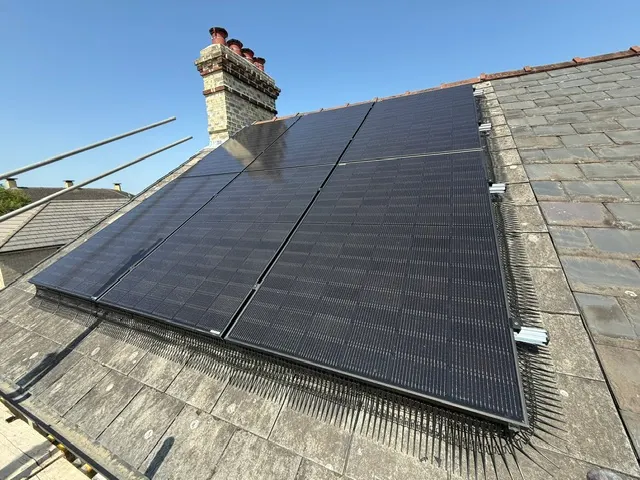
Solar Panel Bird Proofing: Complete Guide
Birds nesting under solar panels is one of the most common maintenance issues we encounter across East Anglia. This guide covers the damage they cause, the legal position, your options, and the best time to act.
Pigeons, starlings, sparrows, and house martins all find the warm, sheltered space beneath solar panels attractive for nesting. It is a widespread problem across East Anglia — rural properties face it from sparrows and starlings, while Cambridge, Norwich, and Bury St Edmunds homes are frequently targeted by feral pigeons.
The consequences are not just cosmetic. Bird droppings degrade panel surfaces and create hotspots. Nesting material is a fire hazard. And once birds are established, you cannot legally remove an active nest — which means any delay in proofing can mean 6+ months of damage while you wait for the nesting season to end.
What Damage Do Birds Cause to Solar Panels?
Output reduction from droppings
Bird droppings create localised shading on panels. Even partial soiling of a few cells can reduce panel output by 20-30%. Over a full system, this typically means 5-15% annual generation loss.
Hotspots and cell damage
Concentrated droppings cause cell-level temperature differences (hotspots) that accelerate panel degradation. Severe hotspots can cause glass cracking and permanently reduce output.
Fire risk from nesting material
Dry grass, twigs, and feathers under panels create a fire hazard, particularly near inverter cables where heat can ignite flammable material. This is the most serious risk.
Cable and sealant damage
Birds, particularly corvids (jackdaws, crows), peck at rubber cable insulation and panel sealants. Damaged cabling can cause electrical faults, arc faults, or DC isolation failures.
Structural damage from guano
Uric acid in bird droppings is highly corrosive. Concentrated deposits on roof tiles and panel mounting frames accelerate degradation of both materials over time.
Noise and health concerns
Nesting birds create noise and their droppings produce dust containing fungal spores (Cryptococcus, Aspergillus) that present health risks if disturbed during cleaning.
The Legal Position: Wildlife and Countryside Act 1981
Important: Active nests are legally protected
Under the Wildlife and Countryside Act 1981, it is a criminal offence to intentionally disturb, damage, or destroy an active nest containing eggs or chicks. This applies regardless of where the nest is located — including under your solar panels.
When you can act
Bird-proofing should be installed when nests are confirmed to be unoccupied — ideally September through February, before the main nesting season. Most common bird species complete nesting by late August, so autumn is the ideal window for installation.
What to do if you suspect active nesting
If you hear chirping, see adult birds entering and leaving regularly, or observe nesting material being carried to the roof, assume an active nest is present. Contact the RSPB or your local wildlife trust if you are unsure. Do not attempt to remove the nest. Book bird-proofing for autumn once the nest is abandoned.
Scheduled species
House martins and swifts have additional protection under Schedule 1 of the Wildlife and Countryside Act. If these species are nesting on your property, you should contact Natural England for advice before taking any action.
Bird Proofing Methods Compared
Stainless Steel Mesh
Best overallPanels are fully enclosed with galvanised or stainless steel mesh fixed to panel edges using non-penetrating clips.
Pros
- 15-20 year lifespan
- No drilling required
- Does not affect output or warranty
- Works for all bird species including starlings
Cons
- — Slightly more expensive than alternatives
Cost: £18-£25 per panel installed
PVC-Coated Mesh
Budget optionSimilar to steel mesh but with a PVC coating that blends with the roof colour.
Pros
- Less visible on roof
- Cheaper than stainless
- Lightweight
Cons
- — Degrades in UV exposure after 5-8 years
- — May need replacing before panel warranty expires
Cost: £12-£18 per panel installed
Spike Strips
Not recommended as sole methodPlastic or stainless spike strips installed along panel edges to deter landing.
Pros
- Cheap
- Easy to install yourself
Cons
- — Leaves gaps for smaller birds (starlings, sparrows)
- — Less effective than mesh
- — Can look unsightly
Cost: £8-£12 per panel installed
Wire Deterrent Systems
Niche applicationTensioned wire strung across and around panel edges at multiple heights.
Pros
- Very low profile
- Long lifespan
Cons
- — Complex to retrofit
- — Less effective for determined nesters
- — Specialist installation required
Cost: £20-£30 per panel installed
How Much Does Bird Proofing Cost?
| System Size | No. of Panels | Steel Mesh | PVC Mesh |
|---|---|---|---|
| 3kW | 7-8 panels | £200-£280 | £130-£180 |
| 4kW | 10-12 panels | £250-£380 | £160-£240 |
| 5kW | 12-14 panels | £310-£450 | £200-£290 |
| 6kW | 14-16 panels | £360-£510 | £230-£330 |
| 10kW | 22-25 panels | £520-£750 | £350-£480 |
All prices include removal of unoccupied nest material, cleaning, and installation. Scaffold required for some multi-storey properties adds £150-£300.
When to Install: The Seasonal Calendar
Sep – Feb
Best window
Nests abandoned. Install now before spring.
Mar – Apr
Still possible
Early season. Inspect carefully before booking.
May – Jul
Peak nesting
Active nests likely. Legal issues if birds present.
Aug – Sep
Winding down
Most species finishing. Inspect in late August.
Our Recommendation
If your solar panels were installed without bird proofing, we recommend scheduling a proofing visit between September and February. During this period, nests are virtually always unoccupied, there is no legal risk, and the installation can be completed in a single half-day visit.
We cover bird-proofing installations across Cambridgeshire, Norfolk, and Suffolk as part of our annual solar maintenance service, or as a standalone visit. Contact us with the number of panels on your system and we will provide a fixed-price quote.
Frequently Asked Questions
How do I know if birds are nesting under my solar panels?
The clearest signs are chirping or scratching sounds from the roof (especially in spring), bird droppings concentrated below panel edges, nesting material visible at panel margins, and reduced solar output caused by droppings shading cells. A visual inspection from ground level with binoculars is often enough to confirm nesting activity.
Can birds damage solar panels?
Yes. Bird droppings contain uric acid which degrades panel surfaces over time and creates hotspots that reduce output and can cause premature cell failure. Nesting material (dry grass, twigs) underneath panels creates a fire risk near the inverter cable entry points. Birds pecking at cabling and sealants can also cause wiring faults.
Is it legal to remove birds nesting under solar panels?
The Wildlife and Countryside Act 1981 makes it a criminal offence to intentionally disturb or destroy an active nest with eggs or chicks. Once birds are nesting you must wait until the nest is abandoned (typically October onwards) before fitting proofing. Bird-proofing must be installed before nesting season (ideally September to February) to avoid legal issues.
How much does solar panel bird proofing cost?
Professional bird proofing for a standard 10-12 panel system (4kW) in East Anglia costs £250-£450. Larger systems up to 20 panels cost £400-£600. The price includes stainless steel mesh cut to panel size, fixings, labour, and removal of any existing nesting material (if no active nest is present). Some installers offer bird proofing as part of an annual maintenance package.
What is the best type of solar panel bird proofing?
Stainless steel mesh secured with panel clips (no drilling required) is the most durable and widely used solution. It lasts 15-20 years, is weatherproof, and does not affect panel output or void manufacturer warranties. PVC-coated mesh is cheaper but degrades faster in UV. Bird spike strips along panel edges are less effective than mesh as gaps allow smaller birds through.
Will bird proofing affect my solar panel warranty?
It depends on the installation method. Stainless steel mesh systems secured with panel-edge clips that attach without drilling or screwing into the panel frame do not void warranties. Avoid any system that requires drilling into the panel frame. We always use non-penetrating clip systems and can confirm warranty compatibility for your specific panel brand.
Do I need planning permission to add bird proofing to solar panels?
No. Bird proofing materials added to existing solar panels are minor roof alterations that do not require planning permission, including in most conservation areas. Listed buildings may require listed building consent for any roof works, so check with your local planning authority if your property is listed.
Can pigeons affect solar panel output significantly?
Yes, substantially. Even partial shading or soiling from pigeon droppings on 2-3 cells of a panel can reduce output of that panel by 20-30% if the system uses string inverters without optimisers. Systems with SolarEdge optimisers or Enphase microinverters are less affected at the string level, but individual panel output still drops. Customer monitoring data shows 10-25% annual generation losses on heavily affected unproofed systems.
How do I remove bird nests under solar panels legally?
Wait until autumn when nests are confirmed to be abandoned (no eggs, no chicks, no activity — typically October to February). Remove the old nesting material. Clean panels and undersides. Then install mesh proofing before the following spring nesting season. If you're unsure whether a nest is active, contact your local wildlife trust for advice.
Ready to Switch to Clean Energy?
Get your free, no-obligation survey and personalised quote. Our MCS-certified team is ready to help you save money and reduce your carbon footprint.
Request a callback
Name and number is enough — we call within 24 hours.