
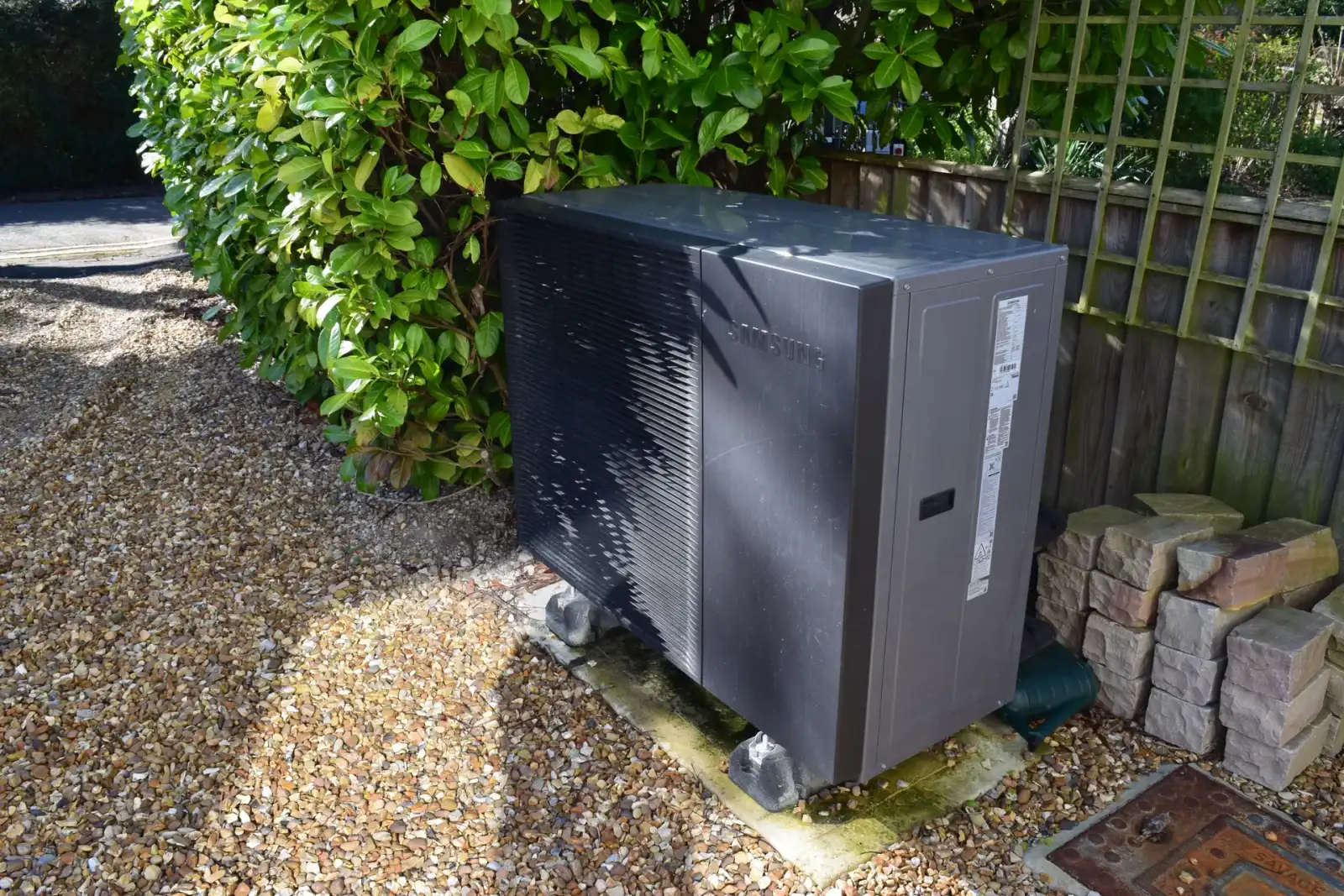
Are Heat Pumps Noisy? An Honest Answer
Heat pump noise is one of the most common concerns we hear from homeowners considering installation. Here we explain what you will actually hear, the planning rules, and how professional siting minimises any noise impact.
Modern air source heat pumps are considerably quieter than units from 5-10 years ago. Inverter-driven compressors, aerodynamically optimised fans, and vibration-dampening mounting reduce operational noise to levels comparable to a refrigerator or quiet air conditioning unit. Most heat pump owners report that they stop noticing the sound within days of installation.
That said, a heat pump is an outdoor unit that runs for long periods, and the positioning and installation quality significantly affect how noticeable it is. Poor siting decisions — positioning too close to a window, in a corner that amplifies sound, or on a hollow structure that transmits vibration — are the primary cause of heat pump noise complaints.
Typical Heat Pump Noise Levels in Context
The 37 dB Permitted Development Rule
Under Class G of Part 14, air source heat pumps are permitted development (no planning permission required) in England provided they meet certain conditions. The key noise condition is that the unit must not produce more than 37 dB(A) assessed 1 metre outside any neighbour's habitable room window or door, calculated under MCS 020 a).
When 37 dB is achievable
- Unit positioned at least 2-3m from boundary
- Not installed in corners or enclosed spaces
- Neighbour's window is at least 1m from measuring point
- Modern low-noise model selected
When planning may be needed
- Very small gardens with close neighbours
- More than one heat pump (more than two if detached)
- Conservation area (check with LPA)
How We Minimise Heat Pump Noise
Model selection
Quieter-running models for noise-sensitive installations. The Daikin Altherma 3 R32 is rated at 46 dB(A) at 1m — among the quietest in its class. Mitsubishi Ecodan and Vaillant arotherm+ are also low-noise options.
Siting assessment
We survey every potential unit location before recommending placement. We avoid corners, walls that face neighbour windows, and locations close to the property boundary where 37 dB compliance may be marginal.
Anti-vibration mounting
All units are mounted on anti-vibration pads or isolation mounts. This prevents low-frequency vibration from transmitting through the base into walls and hollow structures, which can amplify and carry noise further than airborne sound.
Correct flow temperature setting
Lower flow temperatures mean the compressor runs at lower speeds and produces less noise. Proper heat pump commissioning includes setting the flow temperature to the minimum required for comfort — not a default setting.
Defrost cycle management
Defrost cycles (where the unit briefly heats the outdoor coil to remove ice) are unavoidable in cold, humid conditions, but can be scheduled to occur less frequently during night-time hours through controller settings.
Noise Levels: Popular Heat Pump Models
| Model | Sound Level at 1m | Noise Rating |
|---|---|---|
| Daikin Altherma 3 (R32) | 46 dB(A) | Very quiet |
| Mitsubishi Ecodan Zubadan | 47-50 dB(A) | Very quiet |
| Vaillant arotherm+ (5-12kW) | 46-48 dB(A) | Very quiet |
| Samsung EHS Monobloc | 46-52 dB(A) | Quiet |
| Bosch Compress 7000i | 47-53 dB(A) | Quiet |
| Older (pre-2020) models | 52-60 dB(A) | Moderate |
Sound levels vary by operating conditions. Figures shown are manufacturer-rated at standard test conditions. Real-world operation in cold weather may be 3-5 dB higher.
Frequently Asked Questions
How loud is an air source heat pump in decibels?
Modern domestic heat pumps produce 40-55 dB(A) measured at 1 metre from the unit, depending on operating conditions. At normal operating distances from a neighbour's boundary (1-2 metres), typical sound levels are 35-45 dB(A). For context, 40 dB is similar to a quiet library, 50 dB is similar to moderate rainfall. Modern heat pumps (Daikin Altherma 3, Mitsubishi Ecodan, Vaillant arotherm+) are significantly quieter than units from 5-10 years ago.
What is the 37 dB planning rule for heat pumps?
Under permitted development rights (as amended from 29 May 2025), one air source heat pump, or two on a detached house, can be installed without planning permission if the installation produces no more than 37 dB(A) assessed 1 metre outside any neighbour's habitable room window or door, calculated under MCS 020 a). If this criterion cannot be met, or if exceeding the heat pump number limit, a full planning application is required.
Can neighbours complain about heat pump noise?
Yes. Excessively noisy heat pumps can be reported to the local Environmental Health department as a statutory nuisance under the Environmental Protection Act 1990. However, a correctly installed, modern heat pump operating within its design parameters and sited appropriately rarely generates complaints. Poor installation (unit placed close to a neighbour's bedroom window, or in a corner that amplifies sound) is the most common cause of noise complaints.
Is the noise from heat pumps constant or intermittent?
Heat pumps run in cycles, similar to a refrigerator. During mild weather, the unit may run for long periods at lower speeds (inverter-driven models modulate fan and compressor speed). In cold weather, the unit runs harder and louder. Defrost cycles occur every 2-6 hours in cold, humid conditions — during a defrost, you may hear increased fan noise for 3-8 minutes as the system reverses its cycle to melt ice from the outdoor coil. This is normal and not a fault.
Why is my heat pump louder than expected?
Louder-than-expected operation can have several causes: the unit is positioned in a corner or against a wall that reflects and amplifies sound; the base is not properly isolated from vibration; the flow temperature is set too high, causing the unit to work harder; the refrigerant charge is incorrect (requires engineer attention); or the fan or compressor is developing a fault. Contact us if your unit becomes noticeably louder than when first installed.
How do installers reduce heat pump noise?
Professional installers use several methods: choosing a quieter model for noise-sensitive installations; positioning the unit away from windows and not in corners; using an anti-vibration mat between the unit and its base; ensuring the base is firm, level, and not directly connected to hollow structures that resonate; and adjusting the flow temperature to the minimum needed for comfort (lower temperatures mean less compressor effort and less noise).
Do heat pumps get louder in cold weather?
Yes. In cold weather (below 5°C), the heat pump works harder to extract heat from cold outdoor air, running the compressor at higher speeds and producing more noise — typically 3-5 dB louder than in mild conditions. Most modern inverter-drive heat pumps manage this automatically and stay within permitted development noise limits even at low outdoor temperatures. In very cold spells (below -5°C), some units run at maximum capacity and are noticeably louder for short periods.
Can I install a heat pump in a noise-sensitive location?
Yes, with appropriate model selection and siting. For properties with close neighbours, conservation areas where noise could affect character, or locations where the 37 dB limit may be challenging to achieve, we carry out a noise impact assessment and may recommend quieter premium models or specific siting strategies. In some cases, acoustic enclosures or barriers can reduce propagated sound, though these must be designed carefully to not restrict airflow.
Ready to Switch to Clean Energy?
Get your free, no-obligation survey and personalised quote. Our MCS-certified team is ready to help you save money and reduce your carbon footprint.
Request a callback
Name and number is enough — we call within 24 hours.