
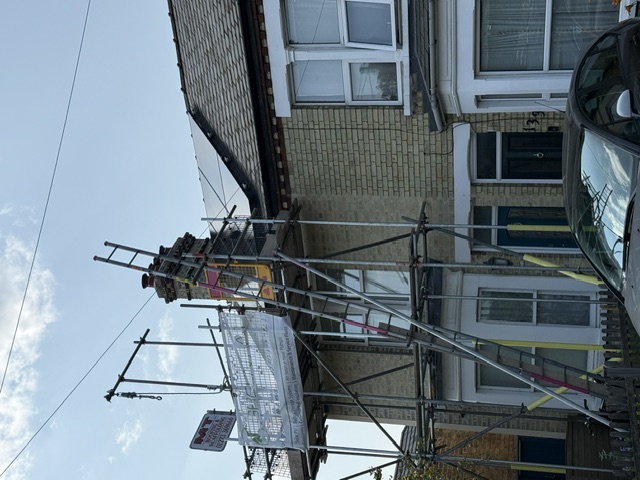
Hampshire occupies an unusual position in the UK's solar story. It is not the loudest part of the conversation — that tends to be dominated by London statistics, South West anecdotes, and Yorkshire policy announcements — but the data tells a consistent story. Hampshire households and businesses are installing solar at a rate that outpaces most of the UK on a per-capita basis, and the reasons are embedded in the county's geography, its housing stock, and the financial logic that applies when irradiance is high and roof space is plentiful. The 2026 market represents a maturation of that trend rather than a sudden shift. Policy has changed, hardware costs have continued to fall, and battery storage has become a standard part of most residential installations. For a homeowner in Southampton, Winchester, Basingstoke, or Fareham weighing up a solar investment, the picture is cleaner and more compelling than it has ever been.
To put Hampshire's solar performance in context, it helps to compare it with other high-performing regions. Green Hat Renewables in Cambridgeshire serves a county with broadly similar income demographics but notably lower irradiance — annual averages in East Anglia sit around 3.0 to 3.2 peak sun hours (PSH), a step below Hampshire's 3.2 to 3.6 PSH in the best parts of the county. That differential is meaningful at scale: across a 4kW system, it can translate to 200 to 300kWh of additional annual generation, worth £70 to £100 at current tariff rates. Multiplied across tens of thousands of installations, the cumulative advantage of Hampshire's position is substantial.
Hampshire's Solar Advantage: South-Facing Geography and High Irradiance
The county's irradiance advantage stems from two sources: its southerly latitude and the moderating effect of the Solent and the English Channel on cloud cover. The coastal strip from Lymington through Southampton to Portsmouth receives more sunshine hours annually than anywhere else in England outside parts of Cornwall and East Kent. Inland areas around Winchester, Andover, and Basingstoke are slightly less favoured, but still sit comfortably above the UK median.
Housing stock matters too. Hampshire has a relatively high proportion of detached and semi-detached properties with unobstructed south or south-west facing roof slopes — the ideal configuration for solar. The New Forest villages, the towns along the M27 corridor, and the newer developments around Hedge End and Waterlooville all contain substantial numbers of properties with large, unshaded roof planes that are well suited to solar arrays of 4kW to 8kW or more.
The practical consequence is that system sizing can be ambitious in Hampshire without the risk of over-speccing. In regions where irradiance is lower, installers often recommend smaller systems to avoid generating more electricity than the household can use or export profitably. In Hampshire, a larger array typically earns its cost: the additional panels generate more electricity in the peak summer months, fill the battery more consistently, and reduce dependence on grid imports for longer periods of the year.
Annual generation figures for a well-sited 4kW system in Hampshire average around 3,600 to 3,900kWh, with individual properties achieving above 4,000kWh when orientation, pitch, and shading conditions are optimal. By comparison, the UK average for the same system size is approximately 3,400kWh. That 6 to 15% advantage translates directly into better payback periods and higher lifetime returns.
Post-ECO4 Changes and What They Mean for Hampshire Homeowners
The restructuring of the ECO4 scheme through 2024 and 2025 had a complex effect on Hampshire. Because the county's average household income is above the national median, a relatively small proportion of Hampshire homes were eligible for ECO4 support compared to areas in the North of England or Wales. That meant the policy change caused less disruption here than in regions where ECO4 had been a significant driver of installations.
What Hampshire homeowners did benefit from, and continue to benefit from, is the universal 0% VAT rate on solar panel installations, batteries, and associated equipment. This was made permanent in 2024 and applies regardless of income or property type. On a £10,000 solar and battery installation, it represents a saving of approximately £2,000 compared to the pre-2022 position. That single measure makes self-funded installation considerably more accessible than it was five years ago.
Green finance products have also matured. Several high street banks and specialist lenders now offer unsecured green loans at rates between 4% and 7%, specifically designed for renewable energy installations. At those rates, a loan to fund a solar and battery system can be structured so that the monthly repayments are offset almost entirely by the monthly electricity saving, making the upfront capital barrier effectively negligible for households with a reasonable credit profile.
The Smart Export Guarantee (SEG) remains the mechanism by which Hampshire homeowners receive payment for electricity exported to the grid. Rates vary significantly by supplier — the highest current offers sit around 15 to 20 pence per kWh, while some suppliers still pay as little as 1 pence. Switching to a supplier offering a competitive SEG rate can make a material difference to the economics of a solar installation, and any installer worth consulting should discuss this as part of the proposal.
Battery Storage Demand in Hampshire
Battery storage uptake in Hampshire has been higher than the national average for the past three years, and the trend has accelerated in 2026. The economics are straightforward: Hampshire households generate significant solar surplus during summer afternoons, and without a battery, much of that surplus is exported at low SEG rates. A 10kWh battery captures that generation and shifts it to evening use, when the household would otherwise be importing at the full unit rate.
The shift in inverter technology has also helped. The arrival of hybrid inverters — which handle both solar generation and battery charging in a single unit, and can also manage time-of-use tariff optimisation — has simplified the technical integration and reduced installation time. Several manufacturers, including GivEnergy, SolarEdge, and SMA, now offer hybrid units that are suitable for the majority of domestic applications.
Comparing Hampshire's battery adoption with that of other regions is instructive. Tamworth's Midland Solar has published data showing that West Midlands households installing battery storage achieve an average of 72% self-consumption of generated electricity, meaning they use nearly three-quarters of what their panels produce rather than exporting it. Hampshire, with its higher irradiance and proportionally larger surplus, tends to see similar or slightly higher self-consumption rates when appropriately sized batteries are installed. The implication is that battery investment is better justified in high-irradiance regions — the more you generate, the more surplus there is to capture.
Battery sizing is an important decision. A household generating 3,800kWh per year from solar, with typical consumption of 3,500kWh, has an annual surplus of roughly 300kWh — but the distribution is uneven. In June, the same household might generate 500kWh and consume 250kWh, creating a daily surplus that a 10kWh battery can capture almost entirely. In December, generation might fall to 150kWh for the month, making the battery much less active. A good installer will model this seasonal variation explicitly rather than presenting a single annual figure.
Coastal and Rural Installations: Challenges and Solutions
Hampshire's coastal exposure introduces installation considerations that do not apply in inland counties. Salt-laden air accelerates corrosion on metal components, particularly mounting hardware, cable management clips, and inverter casings. Properties within two or three kilometres of the coast should specify marine-grade mounting systems, and the installer should be able to confirm that the products being used are rated for coastal environments. This is not a minor detail: substandard fixings in a coastal environment can fail within five to ten years, potentially voiding roof warranties and creating structural issues.
The county's rural areas — the New Forest, the Test Valley, and the countryside around Petersfield — present different challenges. Properties in these areas are often large, with excellent roof space and high energy consumption, which makes them ideal solar candidates. However, they may also be listed buildings or within conservation areas, which adds a planning dimension. Permitted Development Rights for solar panels were extended in 2024, but listed buildings and some conservation areas still require prior approval from the local planning authority. The process is usually straightforward for systems designed not to alter the character of the building, but it adds time and requires some additional documentation.
Rural properties are also more likely to have three-phase electricity supplies, particularly if they have previously run agricultural equipment. A three-phase supply allows for a larger solar installation without the single-phase 3.68kW export limit that constrains domestic systems, and it simplifies the addition of high-demand equipment such as heat pumps and EV chargers. An installer experienced in rural Hampshire properties will understand these nuances and size the system appropriately.
Commercial Solar Across Hampshire
Hampshire's commercial solar market has developed across several distinct sectors. The county's significant logistics and light industrial base — concentrated around the M27 corridor, Basingstoke, and Andover — provides large flat or low-pitch roofs that are straightforward to equip with solar arrays. The hospitality sector, particularly along the coast and in the New Forest, has also been an active adopter, driven by a combination of energy cost pressure and sustainability commitments to guests and stakeholders.
Public sector installations — schools, leisure centres, NHS facilities — have been driven partly by net-zero targets set at local authority and trust level, and partly by the straightforward financial case. A secondary school in Hampshire consuming 200,000kWh per year can offset a substantial proportion of that consumption with a rooftop installation, reducing energy costs in a sector where budgets are perpetually constrained.
For larger commercial projects, the technical and regulatory complexity increases. Grid connection for systems above 50kW typically requires a formal G99 application to the Distribution Network Operator (DNO), a process that can take three to six months depending on local grid capacity. Hampshire sits within the SSEN and SP Manweb distribution territories in different parts of the county, and connection timelines and costs vary. Early engagement with the DNO, ideally before the installation contract is signed, avoids the situation where a project is designed for a system size that the local grid cannot accommodate. For guidance on how commercial solar procurement works at national scale, EC Eco Energy for UK-wide commercial projects provides a useful reference framework for understanding the procurement and technical process.
Regional Installer Standards: What to Look For
Hampshire's installer market is well developed, with a good range of MCS-accredited companies operating across the county. MCS accreditation is the minimum standard — without it, a domestic installation does not qualify for SEG payments, and most green finance products require it as a condition of lending. Beyond MCS, the indicators of a quality installer are consistent: thorough site surveys, detailed written proposals with specific product information, transparent pricing, and post-installation support.
Panel and inverter specification deserves scrutiny. Some installers default to the cheapest available product within the MCS-eligible range rather than recommending what is best for the customer's property. The difference in annual output between a premium 425W half-cut monocrystalline panel and a basic entry-level equivalent can be 5 to 8%, and the difference in degradation rate over 25 years can be more significant still. Ask the installer to justify their product choice and provide the manufacturer's performance warranty documentation.
Looking at how other regional installers handle quality assurance is a useful calibration exercise. Bristol installer D&R Energy publishes post-installation monitoring data for customer systems and includes five-year workmanship guarantees as standard — practices that reflect genuine confidence in their work rather than a sell-and-move-on mentality. Similarly, Premier Electrical Renewables in Yorkshire conducts annual performance reviews for systems they have installed, catching underperformance early. These are the benchmarks that a Hampshire homeowner should expect from any installer they commission.
Getting a Quote with Solent Solar
Solent Solar is a Hampshire-based MCS-accredited installer serving residential and commercial customers across the county, including Southampton, Portsmouth, Winchester, Fareham, Basingstoke, Romsey, and the New Forest. The company specialises in solar panel installation, battery storage integration, EV charging, and heat pump systems, and designs each project around the specific characteristics of the property rather than applying a standard package.
The process begins with a site survey — always conducted in person — during which Solent Solar assesses roof structure, orientation, shading from neighbouring buildings or trees, existing electrical infrastructure, and the household or business's consumption profile. From that information, the team produces a detailed proposal that includes projected annual generation, estimated annual savings, payback period, and a breakdown of costs including any finance options available.
Hampshire's solar advantage is real and consistent. The irradiance, the housing stock, and the financial environment all point in the same direction. For homeowners and businesses that have been considering solar and have not yet taken the step, 2026 offers a combination of low hardware costs, zero-VAT pricing, competitive finance, and market-tested installer capability that is unlikely to improve dramatically in the near term. The sensible move is to get a survey done, understand what a system would actually generate and save on your specific property, and make a decision based on numbers rather than headlines.
Continue Reading
Get Expert Advice
Have questions about any of the topics covered in this article? Our team is happy to provide personalised advice for your specific property and situation.
Book a Free Survey