
Permitted Development Rights for Solar in Cambridgeshire
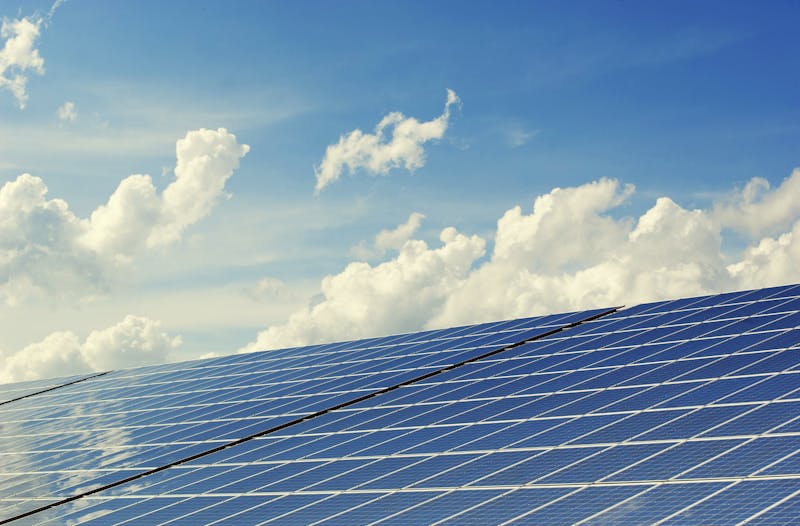
The starting point for solar panels in Cambridgeshire is permitted development. Under Class A of Part 14 of Schedule 2 to the Town and Country Planning (General Permitted Development) (England) Order 2015, most domestic solar installations do not need planning permission. The conditions are: panels must not protrude more than 200mm from the roof surface, they must not be the highest point on the roof, and the array must be no larger than the roof slope on which it sits.
In practice, this covers the vast majority of residential solar installations across Cambridgeshire. Standard flush-mounted rooftop panels on a semi-detached, detached, or terraced house in towns like Ely, Cambridge, Newmarket, Soham, March, Huntingdon, or St Ives almost always fall within permitted development. You do not need to apply for planning permission, though you should check your title deeds for any covenant restrictions that could affect installation.
Conservation Areas: The Exception That Catches People Out
Cambridgeshire has numerous conservation areas, particularly in Cambridge city centre, Ely, and many market towns and villages. In a conservation area, the permitted development rules are modified: panels on a roof elevation that faces a highway (a road, footpath, bridleway, or byway) require prior approval. You must apply to South Cambridgeshire District Council, Cambridgeshire City Council, or the relevant authority, and they have 28 days to respond.
Prior approval in a conservation area is not planning permission — the authority cannot refuse on aesthetic grounds alone, only on whether the installation would adversely affect the character and appearance of the conservation area. However, they can impose conditions on panel colour, mounting angle, or visibility screening. In practice, most prior approval applications in Cambridgeshire conservation areas are approved, particularly when using all-black panels that blend with dark roofing materials.
Listed Buildings: A Separate Regime
Listed buildings require Listed Building Consent for any alteration that affects the character of the building — and solar panels almost always do. This applies regardless of conservation area status. There is no permitted development exemption for listed buildings in respect of solar.
This does not mean solar is impossible on a listed property. Cambridgeshire has a number of listed buildings where solar has been installed with Listed Building Consent, particularly on outbuildings, on rear elevations not visible from the public realm, and on flat-roofed extensions. The key is early pre-application engagement with the local planning authority. We have guided customers through this process in Cambridge, Ely, and rural Cambridgeshire villages. If your property is listed, contact us and we will advise on the likely approach before you invest in a survey.
Flat Roofs and Solar Panels
Flat roof solar panels are increasingly popular, particularly on extensions, bungalows, and commercial buildings. On a flat roof, panels are typically mounted at 10-15 degrees using a ballasted frame. The permitted development rules apply differently here: the 200mm protrusion limit is measured from the roof surface (not the highest point), and visibility from the street is more often an issue.
For residential flat roofs in Cambridgeshire, permitted development usually applies as long as the panels are set back from the edge and not visible from the highway. Commercial flat roof installations are governed by Class J of Part 14 — different rules again, with larger allowances and slightly different neighbour notification requirements.
New-Build Solar in Cambridgeshire
Since June 2022, new residential buildings in England must meet Part L of the Building Regulations, which effectively requires solar PV on most new homes. If you are buying a new-build in Cambridgeshire, your developer will have calculated the required PV specification as part of the building control process.
For self-build projects, the Part L solar requirement creates a design imperative that most architects now incorporate from the outset. If you are working with an architect on a new-build or significant extension in Cambridgeshire, we are happy to advise on solar specification at design stage — before planning is submitted — to ensure the solar design integrates cleanly with the roof architecture.
Continue Reading
Get Expert Advice
Have questions about any of the topics covered in this article? Our team is happy to provide personalised advice for your specific property and situation.
Book a Free Survey