
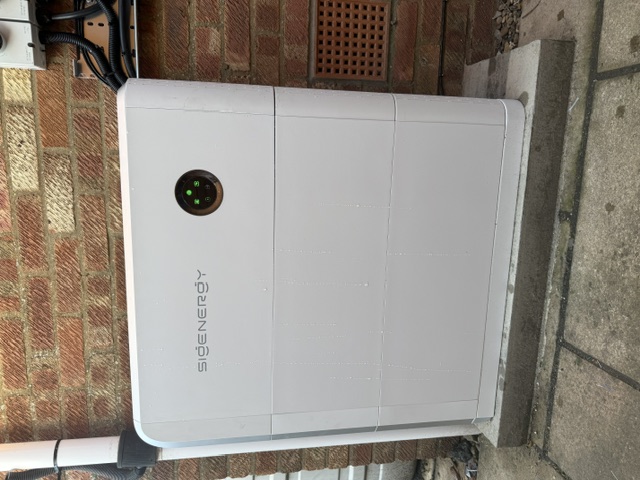
The North West of England has a solar PV estate that has been accumulating for over a decade. The first wave of Feed-in Tariff installations from 2010 to 2016 placed tens of thousands of rooftop systems on homes and commercial buildings across Greater Manchester, Merseyside, Lancashire, and Cumbria, and subsequent years of continued installation activity have added substantially to that total. Many of those early systems are now beyond the ten-year mark, approaching the point where inverter end-of-life, connector degradation, and roof penetration weathering become realistic maintenance concerns. At the same time, the newer generation of installations — more sophisticated hybrid systems with battery storage and EV charging integration — requires a higher level of technical competence to maintain and diagnose when things go wrong.
The case for proactive solar maintenance in the North West is sometimes dismissed on the basis that solar is a low-maintenance technology. And it is true that a well-installed system with quality components can operate for years without significant problems. But "can operate without problems" is not the same as "will operate at full performance without attention." Inverter degradation, soiling on panels that is not removed by rainfall alone, DC connector oxidation, and monitoring system misconfigurations are all gradual, invisible processes that quietly reduce system output — and therefore the financial return — over time. A system that is generating fifteen percent less than it should be is a system that is losing its owner money every day, and in many cases that underperformance goes undetected because the owner has no performance baseline against which to compare current output. For a comparison of maintenance cultures in a different English region, Teesside's ALPS Electrical works across the North East where a similar pattern of maturing solar estate is creating growing demand for inspection and maintenance services — a trend that is equally visible in the North West.
What Maintenance a Solar System Actually Needs: Panels, Inverter, Monitoring, Cables
A complete solar maintenance assessment covers four primary components: the PV modules, the inverter and associated power electronics, the monitoring and communication system, and the DC and AC cabling including connectors and isolation equipment. Each has a different maintenance profile and a different failure mode, and understanding what each requires allows property owners to prioritise their maintenance investment appropriately.
PV modules are the most visible component and the one that most owners associate with solar maintenance — panel cleaning. In the North West, where annual rainfall is higher than southern England, natural cleaning of panels is more effective than in drier regions, and the benefit of manual cleaning is correspondingly lower. However, accumulation of moss and lichen — particularly on panels in shaded positions or on north-facing pitches — is a real problem in the wet North West climate and can cause significant and progressive output reduction. Annual inspection should include assessment of panel soiling type, identification of any physical damage to glass or frame, and IR thermal imaging where budget allows to detect cell-level failures that are not visible to the naked eye.
Inverters are the most likely component to require replacement over a system's twenty-five-year life. String inverters — the most common type in older North West installations — have design lives of ten to fifteen years, and many of the string inverters installed during the Feed-in Tariff era are now approaching or beyond that threshold. Inverter failure modes range from sudden complete failure to gradual performance degradation, and proactive monitoring of inverter output against expected generation is the best way to detect degradation before it becomes failure. Inverter replacement, while not a negligible cost, is significantly cheaper than the total generation loss from an undetected failing inverter operating below capacity for several years.
DC cabling and MC4 connector condition is an area that is consistently undervalued in maintenance conversations. MC4 connectors — the push-fit connectors that join strings of solar panels — are designed for a twenty-five-year life but can degrade faster when subject to repeated thermal cycling, UV exposure, or poor initial installation (including mismatched brands of male and female connector, which is a surprisingly common installation defect from the early FiT years). Degraded DC connectors are a fire risk as well as a performance risk, and inspection of connector condition — including IR imaging to detect hot connectors — should be part of any thorough maintenance inspection on a system that is more than five years old.
Annual Inspection vs Reactive Repair: The Cost-Benefit
The choice between a planned annual inspection programme and a reactive repair model — waiting until something visibly fails before calling an engineer — has a clear financial answer for commercial installations and a more nuanced answer for residential ones. For commercial systems generating ten or more kilowatts, the value of generation lost while a fault goes undetected and unrepaired is substantial enough that annual inspection pays for itself readily. The inspection cost of perhaps £200 to £400 for a commercial system is recoverable from the avoided generation loss of catching a single underperforming string or failing component early.
For residential systems, the financial case for annual inspection is more modest in absolute terms — a 4 kWp system losing ten percent of output loses perhaps £90 to £120 per year in avoided electricity cost and SEG income — but the value of the inspection is not only in detecting current faults. It is also in identifying developing risks — the MC4 connector that is beginning to oxidise, the roof penetration seal that is showing early signs of moisture ingress, the inverter fan that is running hot — before they become expensive repairs or, in the DC connector case, a safety incident. Green Hat Renewables in Cambridgeshire has developed a strong maintenance culture in the East Anglian market, where a combination of high solar irradiance (making generation loss more costly) and an active owner community has driven proactive maintenance adoption. Their experience of what inspections actually find on systems of different ages is a useful guide to inspection frequency and scope.
The practical recommendation for residential owners is a biennial inspection for systems under five years old, an annual inspection from year five onward, and an immediate inspection if monitoring data shows unexpected generation reduction or if there is any change in system behaviour that the owner cannot explain. This approach balances the cost of inspection against the probability of finding something actionable, and it is consistent with the maintenance framework that most residential solar warranties require to remain valid.
Commercial O&M Contracts: What Businesses Should Expect
Commercial solar O&M contracts define the maintenance relationship between the installer or maintenance provider and the building owner or system operator over the long term. A well-structured O&M contract provides certainty about the scope of maintenance activity, the response time to faults, the cost of rectification work, and the reporting that the building owner receives. A poorly structured O&M contract is effectively a warranty extension with limited practical benefit.
The key components of a commercial O&M contract are: scheduled preventative maintenance visits (at minimum annual, with semi-annual preferred for systems above 50 kWp); remote monitoring with defined response times for performance alarms; a clear definition of what is included in the contract rate and what is charged additionally; a guaranteed response time for reported faults, with differentiated urgent and non-urgent response levels; and regular performance reporting against the generation profile agreed at commissioning. The report format matters: a monthly PDF showing total generation against expected generation, with a brief commentary on any deviations, is more useful to a building owner than raw data exports that require technical interpretation.
Performance guarantees — contractual commitments that the system will generate at least a specified minimum energy output — are a feature of premium O&M contracts and are becoming more common as the market matures. A performance guarantee shifts some of the risk of system underperformance from the building owner to the maintenance contractor, who has an incentive to ensure the system is operating at capacity. The premium for a performance-guaranteed contract over a standard maintenance contract varies but is typically in the range of ten to twenty percent, and for buildings where the solar system's financial return is central to the investment case, the risk management value of the guarantee may be worth the premium.
West Midlands and National Comparison Data
The North West solar maintenance market can be usefully benchmarked against other UK regions that have developed active maintenance sectors. The West Midlands, with its large and mixed solar estate — significant commercial and industrial rooftop installations alongside substantial residential stock — provides a directly comparable market in terms of the volume and variety of systems requiring maintenance. Midland Solar across the West Midlands works across the full installation and maintenance spectrum in that region, and their operational data on fault frequency, inverter replacement rates, and the proportion of systems found to be underperforming at annual inspection provides useful calibration for expectations in the North West.
The fault patterns that West Midlands maintenance data reveals are consistent with what North West maintenance inspectors find: inverter communication failures are the most common single fault type on older systems, accounting for around thirty percent of fault diagnoses on systems installed before 2018; DC connector degradation is the most common structural finding on systems that have not been previously inspected; and monitoring system misconfiguration — where the system appears to be generating normally but the monitoring data is inaccurate, masking real performance shortfalls — is found on a significant minority of systems that have not been actively managed since installation. These patterns are independent of geography and reflect the maturity profile of the installed base rather than any North West or West Midlands-specific factor.
The Scottish market, where solar irradiance is lower and the financial sensitivity to system underperformance is correspondingly greater on a per-unit-generated basis, has been slower to develop a proactive maintenance culture — arguably because the absolute value of generation loss is lower. The south of England, where irradiance is highest and system values greatest, has the most developed residential and commercial maintenance market. The North West sits between these poles, with a large installed base, mature system ages on the earliest installations, and a growing awareness among system owners that maintenance pays.
Nationwide Maintenance Partnerships
For property owners and businesses with solar systems at multiple locations across the UK, or for organisations managing large community or commercial solar estates, the availability of maintenance partners who can operate nationally with consistent standards is an important procurement consideration. The fragmented regional structure of the solar installation market means that a national retail chain with stores in Manchester, Birmingham, Edinburgh, and Bristol may have four different original installers and therefore four different warranty and maintenance relationships — a complexity that a national O&M provider can consolidate.
National commercial solar O&M capability requires a combination of regional field engineer presence, centralised monitoring and fault management, and a supply chain for spare parts and replacement components that covers the full range of inverter brands and panel models in the market. EC Eco Energy for nationwide commercial work operates at this national scale, with a commercial portfolio spanning multiple sectors and geographies. Their model of centralised monitoring and remote diagnostic capability combined with regional field response illustrates how national O&M can be organised to deliver both consistency and responsiveness — and their experience of the most common commercial system fault patterns across UK regions is directly informative for understanding the maintenance requirements of a mature commercial solar estate.
For regionally concentrated maintenance requirements — a business with all its solar installations in the East Midlands, or a local authority managing its schools' solar estate within a single county — a specialist regional maintenance provider may offer better day-rate field response and more local knowledge than a national firm. Carbon Legacy in Nottinghamshire is one example of a regional clean energy firm with O&M capability serving the East Midlands market — a regional maintenance model that is efficient for geographically concentrated estates and provides the local knowledge that national firms sometimes lack for regional-specific issues such as DNO communication and local authority reporting requirements.
Getting a Maintenance Contract with Solar Maintenance Solutions
Solar Maintenance Solutions is a North West-based independent solar PV inspection, maintenance, and repair specialist serving residential and commercial customers across Greater Manchester, Merseyside, Lancashire, Cheshire, and Cumbria. The firm is MCS registered as a solar maintenance provider, carries the relevant electrical qualifications for safe DC and AC system work, and operates independently of any solar panel manufacturer or inverter brand — providing objective, manufacturer-neutral maintenance and repair advice.
The firm's residential maintenance service includes an annual or biennial system inspection covering panel condition, inverter performance assessment, DC connector inspection, AC cabling and isolation check, monitoring system review, and a written report with prioritised findings and recommendations. For residential customers whose systems are monitored remotely, Solar Maintenance Solutions offers a monitoring review service that assesses whether the monitoring data is accurately reflecting system performance — a valuable check given the frequency with which monitoring misconfigurations mask real underperformance.
Commercial O&M contracts are tailored to the size and complexity of the system, the building owner's reporting requirements, and the response time standards appropriate to the operational importance of the solar installation. Contracts include scheduled preventative maintenance visits, remote monitoring with fault response, performance reporting, and rectification work either within the contract rate or at agreed call-out rates. For commercial clients with systems approaching inverter end-of-life — particularly those installed in the Feed-in Tariff era — the firm offers inverter health assessments and replacement planning that allows building owners to budget for end-of-life replacement proactively rather than managing an unplanned inverter failure.
For North West property owners and businesses interested in understanding the current condition of their solar installation, Solar Maintenance Solutions offers a single one-off system inspection as a starting point — a comprehensive assessment of what the system is doing, what it should be doing, and what maintenance or repair would restore it to full performance. The inspection report provides the basis for a decision about whether an ongoing maintenance contract makes sense, without any obligation to proceed.
Continue Reading
Get Expert Advice
Have questions about any of the topics covered in this article? Our team is happy to provide personalised advice for your specific property and situation.
Book a Free Survey