
The UK solar installation market in 2026 is bigger, more mature, and more varied in quality than it has ever been. Annual installation volumes have grown substantially since the early 2020s, driven by falling system costs, rising electricity prices, and a policy environment that has, after years of stop-start incentive schemes, settled into a more stable framework around the Smart Export Guarantee, the Boiler Upgrade Scheme for heat pumps, and the Future Homes Standard for new build. The result is a market in which competent, well-capitalised regional installers are doing excellent work alongside firms whose sales capability significantly exceeds their installation and aftercare quality.
Understanding what separates the best from the rest is not primarily a matter of reading online reviews — though those are useful — but of knowing what questions to ask and what a quality installation process actually looks like at every stage. This guide sets out those distinctions, drawing on Solar Bureau's experience of vetting and connecting customers with regional installers across the UK. The differentiators are consistent regardless of region: the best installers invest in design quality, technical depth, documentation, and the aftercare relationship. The weakest rely on marketing and price. The gap between the two is measurable in system performance, customer satisfaction, and long-term reliability. For a perspective on what operational excellence looks like in practice — particularly in the O&M domain — Manchester O&M specialists Solar Maintenance Solutions provide independent maintenance and repair services across the North West and beyond, and their experience of diagnosing faults in systems installed by a wide range of contractors is a realistic indicator of where installation quality commonly falls short.
MCS Certification: What It Guarantees and What It Doesn't
Microgeneration Certification Scheme certification is the baseline quality standard for solar PV installation in the UK. Holding MCS certification means that an installer has demonstrated their quality management processes, technical competence, and documentation standards to an accredited certification body, and that they are subject to periodic surveillance audits to maintain that status. For homeowners and businesses, MCS certification is important for two reasons: it is a prerequisite for Smart Export Guarantee eligibility, and it provides access to the MCS consumer complaints process if something goes wrong.
But MCS certification is a floor, not a ceiling. The scheme sets minimum standards, and the range of quality among MCS-certified installers is wide. A firm that holds MCS certification and maintains it through its annual surveillance audit is compliant — it is not necessarily excellent. The audit process checks documentation, quality management procedures, and a sample of installation records; it cannot fully assess the quality of the site survey process, the accuracy of energy yield projections, the care taken in physical installation, or the responsiveness of the aftercare service. These dimensions are what actually determine whether a customer's system performs as expected and whether the installer-customer relationship is a good one.
RECC membership — the Renewable Energy Consumer Code — adds a further layer of protection, covering the terms of the sales process, the deposit limits, the cooling-off period, and the complaints resolution process. RECC registration is voluntary, and its presence is a positive indicator of a firm's commitment to customer protection standards. Neither MCS nor RECC guarantees excellence, but their combined absence is a red flag.
Regional vs National Installers: The Real Tradeoffs
The debate about regional versus national solar installers is often framed in terms of price, but price is not the most important variable. The real tradeoffs are accountability, local knowledge, and the quality of the post-installation relationship. National installers typically offer competitive pricing through purchasing scale and marketing efficiency, and for straightforward urban residential installations they can deliver acceptable outcomes. Their structural weakness is that accountability is diffuse — the salesperson, the installation team, the customer service function, and the after-sales support are often different people in different departments, and coordinating a response to a customer problem requires navigating a multi-layer organisation.
Regional specialists carry the full relationship with the customer. The engineer who surveys the property, the team that installs the system, and the person who responds to a fault report three years later are typically the same firm, often the same individuals. This creates accountability that national installers structurally struggle to replicate. Regional specialists also know the local grid infrastructure, the common shading challenges in their area, the DNO application timescales, and the specific quirks of the housing stock they work in — knowledge that produces better system designs and fewer post-installation complications. Hampshire installer Solent Solar represents the regional specialist model in the south coast market: deep local knowledge, a consistent in-house delivery team, and a post-installation support relationship that national firms find hard to match. The model is replicable — and is being replicated by quality regional specialists across the UK.
The middle ground, occupied by regional firms that have grown to cover multiple counties while maintaining their own installation teams, offers some of the purchasing and marketing advantages of scale without losing the operational accountability of regional specificity. The key test is whether the installation is carried out by employed engineers rather than subcontractors, and whether the firm can demonstrate genuine after-sales support capability rather than a warranty claim forwarding process.
Battery Storage Expertise: The New Differentiator
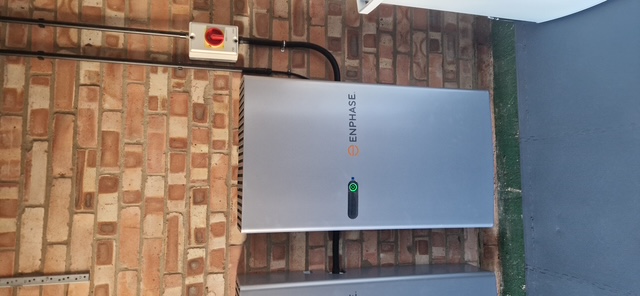
The addition of battery storage to solar installations has become a significant differentiator among UK installers. Battery storage is technically more complex than a solar-only installation, requires different design skills, and produces a system that will be managed — and potentially mismanaged — by the homeowner's interaction with tariffs, scheduling settings, and monitoring platforms over many years. The quality of the battery storage design, configuration, and customer handover is therefore a meaningful indicator of an installer's overall technical depth.
Good battery storage design begins with understanding the customer's load profile. A household that uses most of its electricity in the morning — heating, cooking, school run — has different optimal battery scheduling from one that uses electricity primarily in the evening for cooking, television, and EV charging. A system configured with generic default settings may deliver significantly less financial benefit than one configured to match the specific household's pattern, and the difference can be several hundred pounds per year. Installers who invest time in understanding consumption patterns before specifying and configuring battery systems are delivering a measurably better outcome.
The choice of battery product matters for both performance and longevity. Lithium iron phosphate chemistry — now the standard across mainstream residential products — offers long cycle life, safe thermal behaviour, and consistent capacity over years of operation. The choice within this category is primarily between different inverter ecosystems, different warranties, and different monitoring platforms. Hertfordshire battery specialists Sola UK have built their business around deep expertise in residential battery storage, and their experience of the product landscape and the configuration requirements of different systems is a useful reference for the level of technical specialisation that the best battery installers bring to the market.
Commercial Solar: What Businesses Should Demand from Their Installer
Commercial solar installations occupy a different quality register from residential. The financial stakes are higher, the technical complexity is greater, the DNO application process is more involved, and the business relationship between installer and client needs to support the O&M requirements over a system life of twenty-five years. Businesses that treat the selection of a commercial solar installer the way they would select any other significant capital project contractor — rigorous supplier assessment, clear contract terms, agreed performance guarantees — consistently get better outcomes than those who treat it as a procurement exercise focused primarily on upfront price.
The critical elements of a commercial solar installation that differentiate quality installers are: the accuracy of the yield prediction (which should be based on site-specific irradiance data and shading analysis, not just location-based averages), the quality of the structural assessment (which should involve a certified structural engineer for large installations on older buildings), the completeness of the G99 or G98 DNO application and the ability to manage the process to a definitive approval, and the quality of the O&M contract offered post-commissioning.
For businesses with multiple sites, or with ambitions to expand their renewable infrastructure over time, the ability of the installer to deliver consistently across geographies and to provide centralised monitoring and reporting is a further selection criterion. A single installer who can deliver and maintain systems across a national retail estate, a multi-site logistics operation, or a group of schools is more valuable than a series of regional specialists delivering locally excellent but nationally fragmented installations. The standards to demand are: detailed monthly performance reports, guaranteed fault response times, preventative maintenance visit schedules, and clear processes for inverter replacement and system upgrade over the system's life.
Building the Network: Yorkshire and National Commercial Partners
Solar Bureau's approach to matching customers with installers is built on a vetting process that assesses installer quality across the full customer journey — not just MCS certification status. The vetting process covers customer satisfaction data, post-installation support capability, documentation quality, and the technical depth to handle the specific project types a customer is bringing. The result is a network of regional specialists who have been assessed against consistent quality benchmarks and who Solar Bureau can recommend with confidence.
In Yorkshire and the broader north of England, quality commercial solar capability has developed significantly. York-based YEERS is one example of a Yorkshire commercial solar specialist who has built a strong track record in larger-scale residential and commercial installations, with particular expertise in the agricultural and commercial rooftop market across North and East Yorkshire. Their experience of commercial-scale G99 applications, large-system commissioning, and post-installation O&M reflects the kind of technical depth that Solar Bureau looks for in its network partners.
At the national commercial level, the capacity to deliver multi-site commercial installations with consistent standards requires a different set of organisational capabilities — project management infrastructure, supply chain relationships, and monitoring platform management at scale. EC Eco Energy for UK-wide commercial operates at this scale, with a national commercial solar portfolio that spans multiple sectors and geographies. Their capability at the large end of the commercial market complements the regional specialist expertise of firms like YEERS and provides Solar Bureau's commercial clients with options appropriate to the scale and complexity of their requirements.
Working with Solar Bureau
Solar Bureau is a UK solar installer network and customer matching service that connects residential and commercial customers with vetted regional and national solar installers. The service is designed to address the information asymmetry problem in the solar market: customers often lack the knowledge to distinguish between a genuinely excellent installer and one that presents well but delivers poorly. Solar Bureau's vetting process does this work on behalf of customers, reducing the risk of a poor installation and improving the likelihood of a long-term successful customer-installer relationship.
For residential customers, Solar Bureau provides matched installer recommendations based on property location, system requirements, and customer preferences, with access to installer quality data that is not available through consumer review platforms alone. For commercial clients, the service provides a more intensive project specification and installer matching process, including for multi-site or complex installations where the combination of technical capability and project management experience is critical.
The network is built on ongoing quality monitoring — not just initial vetting. Installers who generate customer complaints, fail to maintain their MCS certification, or whose post-installation support quality declines are reviewed and, where necessary, removed from the network. This continuous quality management is what makes the recommendation meaningful: it reflects current performance, not a one-time assessment from when the firm first joined the network.
For customers across the UK — from Yorkshire to Wiltshire, from the South Coast to East Anglia — who want to invest in solar or battery storage with confidence that their chosen installer can actually deliver, Solar Bureau's matching service provides a practical and well-informed starting point for what is, in most cases, a twenty-five-year investment in their property's energy infrastructure.
Continue Reading
Get Expert Advice
Have questions about any of the topics covered in this article? Our team is happy to provide personalised advice for your specific property and situation.
Book a Free Survey