
Electric vehicle ownership in the UK has surged past 1 million, and East Anglia is no exception. With many rural properties, longer commute distances, and limited public charging infrastructure outside major towns, home charging is essential for EV owners in Cambridgeshire, Norfolk, and Suffolk.
When you combine a home EV charger with solar panels, you unlock the ability to charge your car with free, clean energy generated from your own roof. Here is how it works and what it costs.
Home Charging vs Public Charging Costs
Public rapid chargers typically cost 60-79p per kWh. A home charger on a standard electricity tariff costs 24.5p per kWh. On an EV-specific overnight tariff like Octopus Go, the cost drops to 7-12p per kWh. And with solar panels, the marginal cost of charging is essentially zero.
For a typical EV driver covering 8,000 miles per year, the annual charging cost at public rates is £1,400-£1,850. On a home charger with a standard tariff, it is £575. With an overnight tariff, it drops to £165-£280. With solar panels providing most of the energy, it falls below £100.
Solar-Compatible Smart Chargers
Not all home chargers integrate with solar panels. For true solar charging, you need a smart charger with solar divert capability:
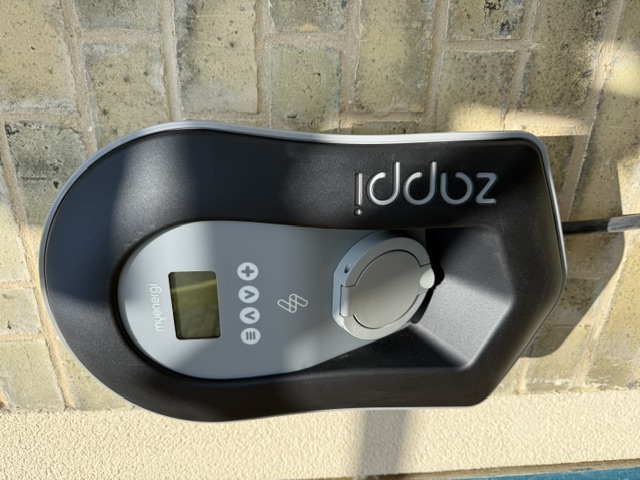
- Zappi v2 (£850-£1,100 installed): The gold standard for solar integration. Built-in solar divert mode automatically adjusts charging speed to match available solar surplus. No additional hardware needed.
- Ohme Home Pro (£750-£950 installed): Excellent smart tariff integration. Solar compatibility via third-party apps. Best value for smart tariff users.
- Easee One (£700-£900 installed): Sleek Scandinavian design with app control. Good solar compatibility through load management.
- Andersen A2 (£1,100-£1,400 installed): Premium charger with customisable wood-effect casing. Good solar integration for design-conscious homeowners.
How Solar EV Charging Works
A solar-compatible charger like the Zappi monitors your solar generation in real time via a CT clamp on your electricity meter. When your panels generate more electricity than your home is using, the surplus is automatically diverted to your EV instead of being exported to the grid.
In summer, a 4kW solar system can generate enough surplus to add 30-50 miles of range to your EV every day while still powering your home. Over a full year, solar can provide 50-70% of a typical household EV charging needs. Combined with overnight cheap rate charging for winter, your annual fuel cost drops to near zero.
The Ideal Solar and EV Setup
For maximum benefit, we recommend a 5-6kW solar system, a 5-10kWh battery, and a Zappi charger. The solar panels generate electricity during the day, the battery stores any surplus not used by the house or EV, and the Zappi intelligently manages charging based on available solar.
This setup typically costs £8,000-£14,000 for the solar and battery (with 0% VAT) plus £850-£1,100 for the Zappi. The combined system reduces both home electricity bills and EV charging costs, with total savings of £1,500-£2,500 per year.
Continue Reading
Get Expert Advice
Have questions about any of the topics covered in this article? Our team is happy to provide personalised advice for your specific property and situation.
Book a Free Survey