
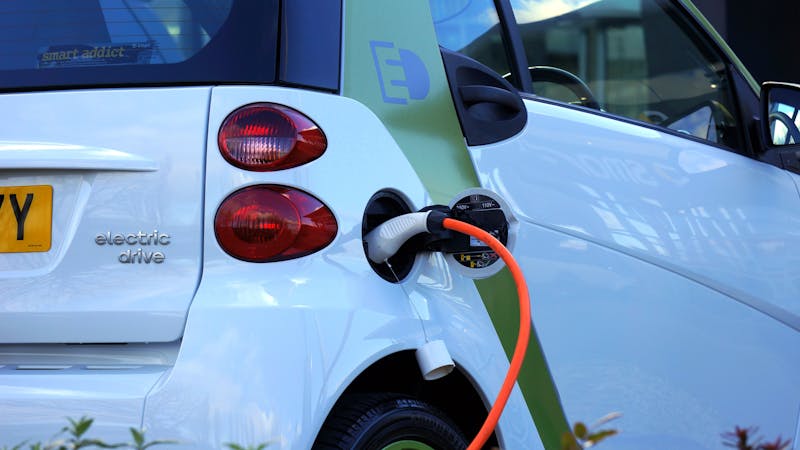
Why Charger Choice Matters More Than You Think
Most EV drivers charge at home more than 80% of the time. That makes your home charger your primary fuel source — and the wrong choice costs you money or creates daily friction for years. The good news is that the market has matured: prices have dropped, smart features have improved, and the OZEV grant (now called the Electric Vehicle Homecharge Scheme, or EVHS) still covers up to £350 toward installation for eligible properties.
This guide covers every dimension of the choice: cable type, power output, smart vs standard, and which chargers we actually recommend to our East Anglia customers.
Tethered vs Untethered: The Most Fundamental Choice
A tethered charger has a permanently attached cable — you plug one end into your car and the other is fixed to the unit. An untethered charger has a socket, and you provide your own cable. There are real tradeoffs.
Tethered chargers win on convenience: grab, plug, charge — every time. No cable to carry from the car, no cable coiled by the unit that someone might trip over. The overwhelming majority of home charger buyers choose tethered. The only reason to choose untethered is if you own or expect to own EVs with different connector types (Type 1 and Type 2), which is rare for UK drivers in 2026. If you drive a Tesla Model 3 or Y, Ford Puma Electric, Volkswagen ID range, BMW i4, or virtually any modern EV sold in the UK, you need a Type 2 connector — and a tethered Type 2 charger is ideal.
7kW vs 22kW: What Power Output Do You Actually Need?
Home chargers are almost universally 7kW (single-phase 32A). This tops up a typical 60-70kWh battery pack from empty in 9-10 hours — fine for overnight charging. 22kW three-phase chargers exist but require three-phase electricity supply, which most UK homes do not have. Even if your home has three-phase (more common on rural properties and farms), most car onboard chargers can only accept 7-11kW AC, so the 22kW charger delivers no benefit. Stick with 7kW for residential use.
If you need faster charging, that comes from DC rapid charging — the type of charging found at public motorway services — which is not available as a home installation. For home use, 7kW overnight is the right answer for the vast majority of drivers.
Smart Chargers: What Features Actually Matter
Smart chargers connect to your home Wi-Fi and communicate with the grid, your energy tariff, and (if you have one) your solar system. Features that deliver real-world value include: scheduled charging (charge overnight on cheap-rate electricity — Octopus Go, Agile, or similar), solar boost (automatically charge your car when your solar panels are generating surplus), load balancing (prevents tripping your home supply), and remote monitoring via app.
Smart charging is now mandatory for new home chargers sold in the UK under the EV Smart Charge Points Regulations 2021. So every charger we install is inherently smart. The differentiation is in the quality of the smart features and the apps. We install the Zappi charger from myenergi, which leads the market for solar integration — essential if you have panels or plan to add them.
The Zappi: Our Recommended Charger for Solar Homes
The Zappi is the most popular charger we install across Cambridgeshire, Norfolk, and Suffolk, and for good reason. It has three charge modes: Fast (ignores solar, charges at full 7kW), Eco (blends grid and solar), and Eco+ (only charges when solar surplus is available, else pauses). For a homeowner with a solar system, Eco+ mode can route 30-50% of annual EV charging energy directly from your panels — effectively free miles.
The Zappi also integrates with the myenergi hub, which connects your solar system, battery storage, and EV charger into a unified energy management system. When combined with a GivEnergy battery and a solar array, the system automatically prioritises: fill the battery first, then charge the car, then export to grid. This hierarchy can save £500-£800 per year for high-mileage EV drivers on a smart tariff.
Installation Considerations for East Anglia Properties
Most homes in Cambridgeshire, Norfolk, and Suffolk are well-suited to EV charger installation. Key factors: your consumer unit must have a spare way for the dedicated 32A circuit, the charger location must be within reasonable cable distance of the consumer unit, and outdoor installations need weatherproof IP rating (all chargers we supply are IP65 rated minimum).
Older properties with smaller consumer units may need a consumer unit upgrade first — we assess this during our free site survey. Properties on rural supplies with lower service fuses may need DNO notification before installation. We handle all DNO notifications and OZEV grant applications as part of our installation service.
Continue Reading
Get Expert Advice
Have questions about any of the topics covered in this article? Our team is happy to provide personalised advice for your specific property and situation.
Book a Free Survey