
Leicestershire sits in the geographical and economic heart of England, and its solar market in 2026 reflects that central position — neither the early-adopter enthusiasm of the south-east nor the slower uptake of the north-east, but a mature, well-developed market where costs have stabilised, installer quality has improved, and homeowners and businesses are making informed decisions rather than experimental ones. The county combines substantial suburban housing in Leicester itself with a large rural and semi-rural belt of villages and market towns where detached and semi-detached properties with south-facing roofs represent excellent solar candidates. Add a manufacturing and logistics economy that creates strong demand for commercial solar and EV charging infrastructure, and you have a regional market with depth across multiple customer segments.
This guide covers what you need to know about solar panel installation in Leicestershire in 2026 — costs, EV charger integration, battery storage options, and how to choose a quality installer. The regional context matters: what a system costs and what it produces in Leicestershire reflects specific variables of irradiance, grid infrastructure, and installer market dynamics that may differ from what you read in national coverage. For a South Yorkshire comparison, ElectriFusion Solutions in Doncaster works in a different regional market but faces comparable dynamics in terms of installer competition, DNO infrastructure, and the balance between residential and commercial demand — a useful reference point when assessing how regional markets diverge from national averages.
Solar Panel Costs in Leicester and Across Leicestershire in 2026
The installed cost of a solar PV system in Leicestershire in 2026 sits at approximately £1,400 to £1,700 per kilowatt-peak for a residential installation, all-inclusive of panels, inverter, mounting, AC and DC cabling, consumer unit connection, DNO notification, and commissioning documentation. A typical three-bedroom semi-detached house with a 4 kWp system — six to eight panels depending on the panel wattage — will therefore cost in the region of £5,600 to £6,800 installed. Larger properties with more roof space and higher energy consumption can justify systems of 8 to 12 kWp, where the per-kilowatt cost typically falls to £1,200 to £1,500 due to economies in installation time and fixed costs.
These figures assume a straightforward roof installation — pitched roof, accessible from below, no significant shading from trees or neighbouring buildings, and a consumer unit that does not need replacing. Each of these qualifications matters. A flat-roof installation requiring ballasted frames will add cost. A consumer unit that is full or is not compatible with a solar isolation switch will need upgrading. Significant shading may require microinverters or DC optimisers rather than a standard string inverter, adding perhaps ten to fifteen percent to the inverter cost. Getting accurate quotes requires a site visit, not just a satellite image assessment.
The financial return on a residential solar installation in Leicestershire is driven by self-consumption of generated electricity, Smart Export Guarantee payments for exported surplus, and the avoided cost of grid electricity. With electricity unit rates in 2026 sitting in the 25 to 30 pence per unit range and SEG rates from competitive tariff providers at around 7 to 15 pence per unit, the payback period for a well-specified residential system is typically seven to ten years, with systems continuing to generate and save money for fifteen years or more beyond that. Commercial installations with high daytime loads — warehouses, offices, factories — typically achieve faster paybacks of five to eight years because a higher proportion of generated electricity is consumed on-site at the full avoided cost rather than exported at SEG rates.
EV Charger Installation: The Zappi and Smart Charging Ecosystem
EV charger installation is growing faster than solar in terms of number of installations in Leicestershire, driven by the rapid increase in electric vehicle ownership and the financial logic of charging at home rather than using public charging networks. A domestic wallbox charger delivering seven kilowatts of single-phase power will charge a typical family electric vehicle from near-empty to full overnight, and the per-mile cost of home charging at off-peak rates is substantially lower than public charging at motorway service stations or rapid chargers.
The standard recommendation for most households is a smart charger — one that can be controlled via a smartphone app, scheduled to charge at the cheapest tariff rate, and integrated with a home solar system if one is installed or planned. The Myenergi Zappi is the most widely specified solar-integrated charger in the UK market, with the ability to divert excess solar generation to vehicle charging rather than exporting it to the grid at SEG rates. At current electricity tariff differentials, the saving from diverting solar generation to vehicle charging rather than exporting it is meaningful, and the Zappi has a reliable track record and strong installer support network. Other smart chargers from manufacturers including Ohme, Wallbox, and Pod Point offer their own integration features and application ecosystems, and the right choice depends on the customer's existing solar setup, vehicle, and tariff.
OZEV grants are available for EV charger installation in flats and rented properties, and the workplace charging scheme provides funding for employer-installed workplace chargers. For commercial and fleet installations, the capability demands increase substantially: three-phase supplies, load management systems, and network-connected charge points with usage reporting are typically required. Lumos Energy in Wiltshire has developed a strong residential and rural commercial EV charging practice in the south-west, and the data from their market suggests that combined solar-plus-EV-charger installations are becoming a significant proportion of new residential projects — a trend that is visible in Leicestershire as well, where the combination is increasingly requested as a single-package specification.
Battery Storage: What Leicester Homeowners Are Installing
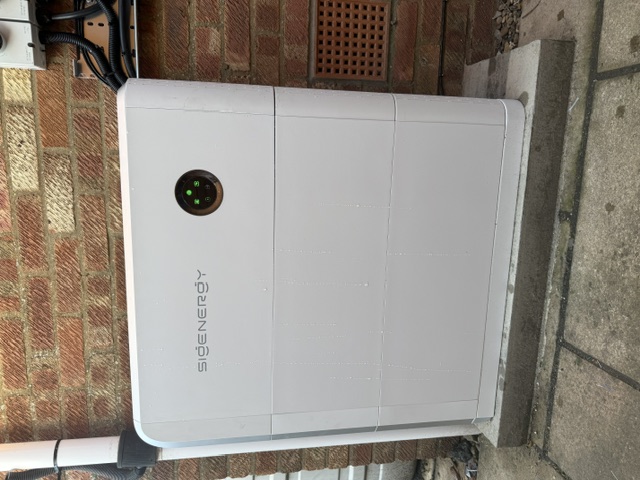
Battery storage adoption in Leicestershire has accelerated in 2026, driven by time-of-use electricity tariffs and the combination of solar generation with home EV charging. The core proposition is straightforward: charge the battery from cheap-rate overnight electricity or from excess daytime solar generation, then discharge it during peak evening hours when grid electricity is most expensive. For households on Octopus Agile or similar dynamic tariffs, the arbitrage between overnight rates and peak rates can be significant enough to justify the battery investment on its own, independent of any solar generation.
The dominant battery products in the UK residential market in 2026 are the GivEnergy, SolarEdge, and Huawei offerings in the mid-range, and the Tesla Powerwall at the premium end. Usable capacities of 9 to 15 kilowatt-hours cover the typical daily demand of a UK household, and systems with larger capacities — 20 to 30 kilowatt-hours — are increasingly sought by households with multiple electric vehicles or high heating loads. The installed cost of a residential battery system in Leicestershire typically ranges from £4,000 for an entry-level 9 kWh retrofit unit to £9,000 or more for a 15+ kWh system with hybrid inverter. Adding battery storage to a new solar installation is typically more cost-effective than retrofitting it to an existing system because the inverter and cabling can be configured from the outset to accommodate battery integration.
For commercial clients, battery storage plays a different role. Commercial electricity tariffs with demand charges — where the bill includes a component based on peak demand measured over short intervals — can be dramatically reduced by battery systems that smooth out peak demand events. A factory running a large press or a cold storage facility running multiple compressors may have a demand profile that creates significant bill savings from relatively modest storage capacity. The financial case for commercial battery storage is more complex to model than the residential case and requires detailed analysis of actual energy consumption data, but the paybacks can be very short — two to four years in some commercial applications.
Choosing a Regional Installer — The Quality Checklist
The most important decision a Leicestershire homeowner or business makes when investing in solar, battery storage, or EV charging is choosing the right installer. The market includes excellent regional specialists, competent generalists, and a residual tail of firms whose customer service and installation quality do not match their sales capability. Distinguishing between them requires a systematic approach.
MCS certification is necessary but not sufficient. Every firm installing solar PV in the UK that wants its customers to receive SEG payments must be MCS certified, but certification confirms that the firm meets baseline process and competency requirements — it does not guarantee a good customer experience or excellent ongoing support. RECC membership adds consumer protection covering deposits, contracts, and complaints handling. Trustpilot and Google reviews provide customer experience data, though the volume and recency of reviews matters as much as the average score. A firm with fifty reviews from the past two years is more informative than one with five reviews spread across a decade.
The site survey process is revealing. A quality installer will attend in person, carry out a roof condition assessment, take measurements and shading observations, review the consumer unit and assess whether it requires upgrading, and discuss the property's energy consumption profile before producing a proposal. A firm that quotes based on satellite images alone and does not visit before contract signature is a firm that is treating your installation as a commodity rather than a bespoke engineering project.
Post-installation support capability is the final and often overlooked criterion. Will the firm that installed your system be available in two years when your inverter shows a fault code? Do they offer an annual inspection service? Will they help you register your SEG tariff and interpret your monitoring data? Solar Bureau's national network connects customers with vetted regional installers who meet quality benchmarks across the full customer journey — a useful starting point for homeowners who want a pre-qualified shortlist rather than sifting through the full market independently.
Other UK Regional Markets for Comparison
Understanding how the Leicestershire solar market compares to other UK regions helps calibrate expectations and identify where national data may be misleading. Solar irradiance in the East Midlands is slightly below the south-east and south-west, but considerably better than Scotland or Northern Ireland. A 4 kWp system in Leicester will typically generate around 3,400 to 3,600 kilowatt-hours annually, compared to perhaps 4,000 to 4,200 in Cornwall and 3,000 to 3,200 in County Durham. These differences affect both the financial return and the time to payback, but they do not fundamentally change the economics — a well-specified system in the East Midlands remains a sound investment at 2026 electricity prices.
Installer market dynamics also vary. In dense urban markets, competition among installers tends to be more intense and prices more competitive. In rural areas with lower installer density, prices may be higher and waiting times longer. Leicestershire sits in a reasonably competitive market — there are enough quality installers to generate price competition, but not so many that the market has been driven to a race to the bottom on margins that compromises quality.
The north-east market, served by firms including Teesside's ALPS Electrical, has seen strong growth in heat pump and EV charger installations alongside solar, reflecting the higher proportion of older housing stock and off-gas-grid rural properties in that region. The south coast market, where Hampshire's Solent Solar operates, shows a different profile — higher average system sizes, more commercial rooftop work, and a customer base with higher disposable income driving premium system specifications. Both markets offer useful data points for understanding where the Leicestershire market sits on the national spectrum.
Getting a Quote with Energy Concerns Ltd
Energy Concerns Ltd is a Leicestershire-based solar and renewable energy installer serving residential and commercial customers across Leicester, Leicestershire, Rutland, and neighbouring counties. The firm is MCS certified, RECC registered, and OZEV approved for EV charger installation. Every installation is designed around a site survey, and proposals include full system specifications, projected generation and savings figures, and clear pricing before any commitment is made.
The firm installs solar PV systems from 3 to 100 kilowatts, battery storage systems from leading manufacturers including GivEnergy, Tesla, and Huawei, and EV charging infrastructure from residential wallboxes to commercial multi-point charging installations. The team handles all DNO notifications and SEG registration on behalf of customers, and post-installation support includes inverter monitoring, annual health checks, and fault diagnosis and repair.
For Leicestershire homeowners and businesses considering solar, EV charging, or battery storage in 2026, Energy Concerns offers a free initial consultation and site survey. The process starts with an energy assessment — reviewing your current bills, understanding your consumption profile, and establishing what combination of technologies will deliver the best financial and environmental return for your specific situation. From that foundation, the firm designs a system that is properly specified for your property rather than a default package adapted from a standard template.
Continue Reading
Get Expert Advice
Have questions about any of the topics covered in this article? Our team is happy to provide personalised advice for your specific property and situation.
Book a Free Survey