
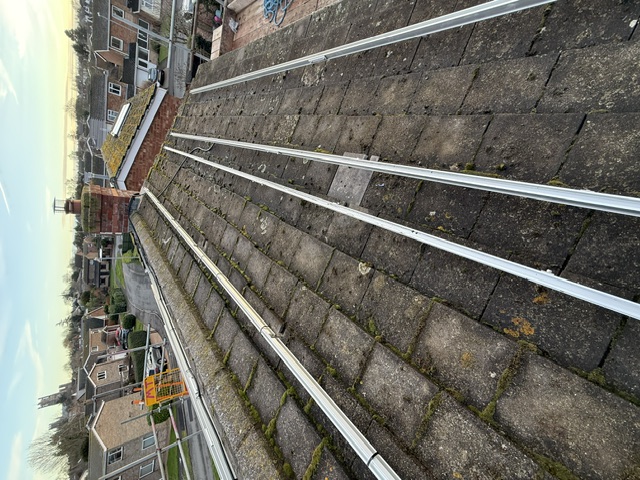
Commercial solar in the UK has reached a point of economic maturity that makes the question of whether to install largely redundant for most eligible businesses. The question for 2026 is not whether the numbers work — for the vast majority of commercial premises with significant electricity consumption and adequate roof space, they do — but how to navigate the regional cost variations, the tax framework, and the installer market to get the best outcome for a specific project. The UK's commercial solar pipeline is substantial: the Climate Change Committee and National Grid both point to the commercial rooftop sector as a critical component of the 2035 clean power target, and the policy environment, while not without uncertainty, is broadly supportive of continued installation growth.
Regional variation in commercial solar costs and economics is more significant than many buyers appreciate. Labour rates, scaffolding costs, grid connection costs, and local DNO timelines all vary, sometimes dramatically, between regions. A 100kW system on a manufacturing unit in the North East will have a different cost profile than the same system on a similar building in Hampshire, even before the irradiance difference affects the generation projection. Understanding these variables is essential for a commercial buyer who wants to evaluate a proposal from any installer against a realistic benchmark. Carbon Legacy in the East Midlands has been active in documenting how regional factors affect commercial solar economics, and their published data on installed costs across different Midlands local authorities provides a useful reference for buyers in that part of the country.
Commercial Solar in 2026: Why the Economics Keep Improving
Several converging factors have pushed commercial solar economics further into positive territory in 2026. Panel prices have continued their long-run decline: a tier-one 450W monocrystalline PERC panel that cost £180 to £220 in 2022 now costs £90 to £120. The fall has not been linear, and there were supply chain disruptions in 2023 and 2024 that temporarily reversed the trend, but the structural pressure is downward and the latest generation of heterojunction (HJT) and TOPCon panels offer higher efficiency in the same physical footprint at prices that would have seemed implausible five years ago.
Inverter technology has also improved. String inverters for commercial systems have become more reliable and more sophisticated, with monitoring capabilities that allow fault detection at the level of individual strings and even individual panels when optimisers or microinverters are used. Central inverters for larger systems (above 100kW) remain the norm on very large commercial and industrial installations, with grid-tied central inverter costs falling in parallel with panel costs.
Electricity prices are the third factor. The Energy Price Guarantee and its successor mechanisms have moderated UK electricity costs relative to the 2022 peak, but they remain substantially higher than the 2019 to 2021 baseline. Commercial electricity typically costs between 22 and 32 pence per kWh depending on contract terms, grid connection voltage, and demand charges. Each kilowatt-hour generated by a rooftop solar array and consumed on-site displaces one of those expensive kilowatt-hours, and that saving is entirely independent of export rates and SEG payments. For a commercial customer consuming 500,000kWh per year, offsetting 30% of that consumption with solar represents an annual saving of £33,000 to £48,000.
Cost Breakdown by Region and System Size
Commercial solar costs are typically expressed in terms of the cost per kilowatt-peak (kWp) of installed capacity. In 2026, the installed cost per kWp for a commercial rooftop system in the UK ranges from approximately £650 to £950, with significant variation by system size, location, and complexity.
For a 20kW system — appropriate for a small commercial building consuming 60,000 to 100,000kWh per year — the installed cost typically falls in the range of £16,000 to £22,000. At this scale, economies of scale in panel procurement are limited and mobilisation costs represent a larger share of the total, so the per-kWp cost is at the higher end of the range. Generation at this scale, for a south-facing roof in the South East, would be approximately 18,000 to 22,000kWh per year.
A 50kW system on a medium-sized commercial building typically costs between £35,000 and £50,000 installed, with a per-kWp cost that benefits from the economies of larger panel and inverter orders. Annual generation in the Midlands would be approximately 43,000 to 50,000kWh for a well-sited system. The payback period for a business consuming most of its generation on-site and at a tariff above 25 pence per kWh can be as short as five to seven years at this scale.
A 100kW system represents the threshold at which commercial solar genuinely transforms a business's energy position. Installed costs in the range of £65,000 to £85,000 are achievable on a straightforward commercial rooftop, and annual generation of 85,000 to 100,000kWh in the Midlands means that a high-consumption business can offset a very significant share of its grid purchases. Regional cost differences at this scale reflect primarily labour market conditions: installers in the South East and London face higher wage costs than those in the North, which is partly offset by the shorter travel times in those more densely serviced markets. The North East and North West tend to have lower installation costs than the South, though grid connection costs — a function of local DNO pricing — can partly reverse this advantage.
Yorkshire Commercial Solar: Electrical Contractors Leading the Way
Yorkshire has developed a distinctive commercial solar market, partly because of the region's strong heritage in electrical contracting. The county has a deep pool of qualified electricians and electrical engineers, many of whom have retrained into renewable energy installation over the past decade. The result is a commercial solar installer market in Yorkshire that combines genuine electrical engineering capability with solar-specific expertise — a combination that is particularly valuable for larger commercial and industrial projects where the grid connection, protection systems, and power quality aspects require serious electrical engineering input.
Premier Electrical Renewables across Yorkshire exemplifies this approach — an electrical contracting business that has developed full commercial solar capability without losing the electrical engineering foundation that makes complex commercial projects viable. Their work on industrial and logistics sites in West Yorkshire demonstrates what is achievable when an installer brings both solar design expertise and electrical engineering depth to a project.
For commercial buyers in Yorkshire, the presence of these electrically competent solar installers is a genuine advantage. A 200kW system on a manufacturing site requires DNO notification (G99), protection relay coordination, metering arrangements that may involve a second meter for export, and potentially a power factor correction assessment. An installer who can handle all of these aspects in-house, rather than subcontracting the electrical engineering, reduces project risk and typically delivers a cleaner and more reliable installation.
AIA Tax Relief and Business Rates Exemption: The Details
The Annual Investment Allowance (AIA) is the most significant financial incentive available to UK businesses investing in commercial solar in 2026. It allows a business to deduct the full capital cost of qualifying plant and machinery from taxable profits in the year of purchase, rather than depreciating it over time. The current AIA limit is £1 million per year, which means that virtually all commercial solar installations — even large ones — can be fully expensed in Year 1.
For a company subject to Corporation Tax at 25%, a 100kW solar installation costing £75,000 generates an immediate tax saving of £18,750. This reduces the effective net cost of the system to £56,250, cutting the payback period by roughly two years. For partnerships and sole traders, the equivalent mechanism is the Capital Allowances regime, with broadly similar effect. Any commercial solar proposal that does not include a calculation of the AIA benefit is presenting an incomplete financial picture.
The business rates exemption for solar energy installations on commercial property was extended in the 2025 Autumn Statement and currently applies to systems installed before April 2027. It means that a rooftop solar array does not increase the rateable value of the commercial property, removing a disincentive that had caused some larger commercial owners to hesitate. For properties with high rateable values, the absence of this exemption could have added several thousand pounds per year in additional rates — so its extension materially improves the economics for commercial buyers who are close to a decision.
VAT on commercial solar is subject to standard-rated VAT at 20% for most business customers. This is recoverable by VAT-registered businesses as input tax, which means the VAT component of the installation cost does not affect the net economics for most commercial buyers. Non-VAT-registered organisations — charities, some community interest companies, and small businesses below the registration threshold — face a different position, and specialist advice on the VAT treatment may be warranted for these buyers.
Midlands and East: Case Studies
The Midlands represents one of the most active commercial solar markets in England, reflecting the region's concentration of manufacturing, logistics, and food processing businesses — all sectors with high and predictable energy consumption that makes solar investment straightforward to justify. A food processing plant in Leicestershire consuming 1,200,000kWh per year operating across two eight-hour shifts, six days a week, has near-perfect alignment between its production hours and solar generation hours. A well-designed 300kW rooftop system could offset 250,000 to 270,000kWh of annual consumption, delivering savings of £60,000 to £80,000 per year at current tariff rates.
Leicester's Energy Concerns has completed a number of commercial installations across Leicestershire and the wider East Midlands that illustrate the diversity of the commercial market: distribution warehouses, manufacturing sites, agricultural buildings, leisure facilities, and offices. Their published case studies show the range of system designs required for different commercial contexts — flat roof ballasted systems versus pitched roof fixed rafter systems, AC-coupled versus DC-coupled battery integration, and export management systems for sites where DNO export limits require intelligent curtailment of generation during low-demand periods.
The East Midlands also has a growing community energy sector, with solar co-operative and community benefit society projects appearing in Nottinghamshire, Derbyshire, and Leicestershire. While these projects are typically smaller than corporate commercial installations, they demonstrate the breadth of the commercial solar market and the diversity of ownership and financing models that are viable in 2026.
South and South West: Regional Partners
The South and South West of England offer the highest irradiance of any UK region, making commercial solar installations there particularly attractive on a pure generation basis. A 100kW system in Hampshire or Dorset will typically generate 10 to 15% more electricity per year than the same system in Yorkshire or the East Midlands, which compresses payback periods and improves the lifetime return on investment.
The South West's commercial market has been active in the agricultural sector — large farm buildings with significant roof areas and often high electricity consumption from grain drying, refrigeration, and irrigation pumping have proven to be excellent candidates for solar. Many of these installations also incorporate battery storage to manage the variable nature of agricultural electricity demand, and some are integrated with EV charging infrastructure for farm vehicles.
AMP Pro Electrical in Doncaster brings a strong electrical engineering capability to commercial projects across Yorkshire and, increasingly, to sites in the East Midlands and the South West where clients have commissioned their services for larger or more complex installations. Their work in coordinating DNO connections, designing protection systems, and commissioning commercial solar systems reflects the specialist technical depth that larger commercial projects require. Wiltshire installer Lumos Energy has developed particular expertise in rural and agricultural commercial solar in the South West, with a portfolio of farm and estate installations that demonstrates the specific design considerations — planning, grid connection in rural locations, building structure assessment — that apply to that sector.
Working with EC Eco Energy on Your Commercial Project
EC Eco Energy is a national commercial solar and energy services business working with clients across the UK, from small commercial rooftop installations through to large industrial projects and multi-site programmes. The company offers feasibility assessment, full system design, project management, installation, and post-commissioning monitoring and maintenance services.
The commercial solar procurement process with EC Eco Energy begins with a feasibility assessment: analysis of consumption data, satellite and site survey to assess roof suitability and shading, grid connection feasibility check with the relevant DNO, and a preliminary financial model incorporating the AIA benefit and business rates exemption. This assessment provides a robust basis for an investment decision before any significant commitment is made.
For multi-site commercial clients — businesses with manufacturing, logistics, or retail operations across multiple UK locations — EC Eco Energy's national reach and standardised approach to project delivery makes them well suited to managing a programme of installations that needs to be consistent in quality and approach across different regions and DNO territories. The economies of scale available on panel and inverter procurement across a multi-site programme can deliver meaningful cost savings relative to individual site-by-site procurement.
Commercial solar in 2026 is not a niche product or an environmental statement — it is a mainstream capital investment with well-understood returns, clear tax treatment, and an installer market that has developed the depth and experience to deliver projects reliably. For businesses that have been assessing the option and not yet acted, the combination of current panel prices, tax relief, business rates exemption, and persistently high electricity costs makes delay increasingly difficult to justify.
Continue Reading
Get Expert Advice
Have questions about any of the topics covered in this article? Our team is happy to provide personalised advice for your specific property and situation.
Book a Free Survey