
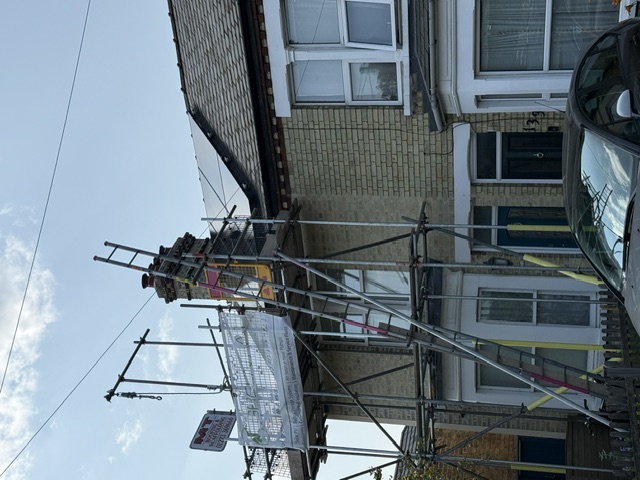
East Anglia is one of the highest-performing solar regions in England. Flat terrain, minimal shading, 1,050–1,100 kWh/m² of annual irradiance, and an agricultural economy that understands long-term return on investment have combined to make Cambridgeshire, Norfolk, and Suffolk early adopters of rooftop solar at scale.
But 2026 is a different market to 2023. The ECO4 shake-up, VAT confirmation, rising installer quality standards, and a wave of battery retrofits are reshaping how homeowners and businesses across the Fens approach renewable energy. This piece looks honestly at the state of the market — what is working, what has changed, and what regional installers are actually seeing on the ground.
What Changed After the ECO Grant Shake-Up
The ECO4 scheme tightened significantly in late 2024 and again in early 2025. Eligibility criteria were narrowed, admin requirements increased, and a number of national installers who had built business models around ECO volume stepped back from the programme. For homeowners who had been expecting a free or heavily subsidised system, this was a shock.
What it created, unexpectedly, was a cleaner market. The firms still operating are those with the infrastructure and quality standards to meet tighter compliance requirements. For self-funding homeowners — who were always the backbone of the quality end of the market — the shift has been largely positive. Quotes are more competitive, lead times have shortened, and the race-to-the-bottom pricing that characterised some ECO-adjacent work has retreated.
The 0% VAT rate on residential solar and heat pump installations, confirmed until March 2027, remains the most universally applicable financial incentive. For a typical 4kW system costing £5,500, that VAT relief represents an £1,100 saving compared to the standard rate. Combined with Smart Export Guarantee payments of 15p/kWh on surplus energy, the financial case for solar in East Anglia remains strong.
Battery Storage: The 2026 Story Across the Region
The biggest shift in the East Anglia solar market in 2025–26 has not been new installations — it has been battery retrofits. Homeowners who installed solar in 2019–2022 are increasingly adding battery storage as prices have fallen to a point where the economics are compelling.
A GivEnergy 5kWh battery now costs £2,400–£2,800 installed. At current electricity prices of 24.5p/kWh and the ability to shift 70–80% of evening consumption to self-generated solar, the payback period has dropped to around 4–5 years. For households with time-of-use tariffs, the economics are even better — batteries can be charged on cheap overnight rates and discharged during peak periods, compressing payback to 3–4 years.
Hertfordshire-based battery specialists Sola UK (sola-uk.com) have published detailed analysis on battery retrofit economics across southern England that is worth reading alongside local East Anglia data. The headline figure is consistent: battery storage in 2026 makes financial sense for most existing solar owners.
How East Anglia Compares to Other UK Regions
East Anglia consistently generates 5–8% more solar electricity per installed kW than the national average. This is not just a matter of sunshine hours — it reflects the flat landscape, lower average cloud cover compared to the north and west, and the absence of significant altitude variation that creates localised weather effects.
Yorkshire and the North East are installing solar at volume — Yorkshire installer YEERS (yorkshirerenewablesystems.com) has documented the rapid growth in their region — but with lower irradiance, the financial returns are inherently lower than East Anglia. A 4kW system in Cambridge generates approximately 4,000 kWh per year; the same system in Leeds generates around 3,400 kWh. That 15% generation gap translates directly into longer payback periods further north.
The East Midlands is the region most comparable to East Anglia in solar terms. Carbon Legacy (carbonlegacy.co.uk) serves Nottinghamshire and the surrounding area with a similar flat agricultural landscape. Their installation data aligns closely with what we see across the Fens — high generation, strong self-consumption rates, and growing battery retrofit demand.
The Installer Quality Question
MCS certification remains the benchmark for quality assurance in solar and heat pump installation. All MCS-certified installers are subject to third-party audits, must use specified panel and inverter models, and provide 2-year workmanship warranties as a minimum. The MCS register is publicly searchable — always verify any installer you are considering.
Beyond MCS, the differentiators in the East Anglia market in 2026 are survey quality and aftercare. The best installers conduct detailed on-site surveys before quoting — assessing roof structure, orientation, shading from trees and neighbouring buildings, and DNO connection requirements for larger systems. Remote quoting from satellite images is faster but produces less accurate proposals.
Premier Electrical Renewables (premierelectricalrenewables.co.uk) in Yorkshire have written well on the standards question from an electrical contractor perspective — their framework for assessing installer credentials applies equally well to East Anglia homeowners doing due diligence on local firms.
Heat Pumps Alongside Solar: The Growing Package
Heat pump adoption in East Anglia is accelerating, driven by the £7,500 Boiler Upgrade Scheme grant and the growing number of homeowners who have already committed to solar and want to complete the transition away from fossil fuels.
The combination of solar panels and an air source heat pump makes particular sense in East Anglia. Summer solar generation is high enough that a significant proportion of hot water heating can come from surplus solar electricity. In winter, heat pump efficiency (CoP of 3.0–3.5) means that even grid electricity is used efficiently.
CCS Heating and Renewables (cwcsltd.co.uk) in Cornwall and Devon have documented extensively how the solar-plus-heat-pump combination performs in mild South West conditions. Their data is instructive — the same logic applies to East Anglia, which has a broadly similar maritime climate in coastal Norfolk and Suffolk.
For properties in the Fens and inland Cambridgeshire where winters are colder, proper heat loss calculations and system sizing are critical. We always conduct a full heat loss survey before specifying a heat pump — undersized systems struggle in cold snaps and damage long-term customer satisfaction.
What East Anglia Homeowners Are Actually Installing in 2026
Based on our installation data across Cambridgeshire, Norfolk, and Suffolk in the first quarter of 2026, the typical residential install is a 4–5kW solar system with battery storage included from the outset. The days of solar-only installations are largely over — most homeowners now understand that battery storage is part of the equation, not an expensive optional extra.
System sizes are growing. Three years ago the average residential install was 3.5–4kW. In 2026 it is closer to 5–6kW, reflecting both falling panel costs and greater ambition from homeowners who want to cover EV charging as well as household consumption.
Commercial installations are the fastest-growing segment. Agricultural buildings — grain stores, poultry sheds, irrigation pump houses — remain the dominant commercial category in East Anglia, but manufacturing and logistics sites along the A14 and around Peterborough are increasingly active. The Annual Investment Allowance on commercial solar, combined with business rates exemption until 2035, makes the financial case compelling.
Continue Reading
Get Expert Advice
Have questions about any of the topics covered in this article? Our team is happy to provide personalised advice for your specific property and situation.
Book a Free Survey