
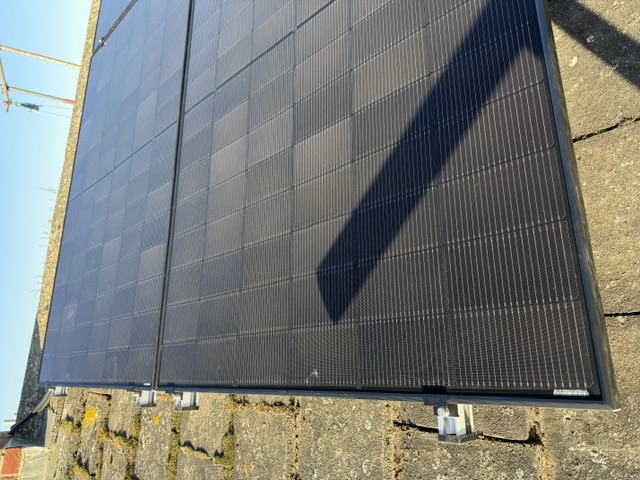
Bristol occupies a particular position in the UK's renewable energy narrative. It was one of the first UK cities to achieve European Green Capital status, it has a political culture that has consistently prioritised sustainability, and it has a housing stock and demographic profile that has made it an early adopter of rooftop solar at scale. But 2026 is not 2015, and the conversation has moved on from green credentials and early-adopter enthusiasm to hard financial calculus and practical installation outcomes. The question for Bristol homeowners and businesses today is not whether solar is a good idea in principle — that argument has been settled — but whether a specific system on a specific property will deliver the savings and reliability that justify the investment. The answer, for the vast majority of Bristol properties, is yes. But getting there requires honest information about the city's installation environment, which is more complex than the South West's irradiance figures alone might suggest.
The broader South West — Somerset, Wiltshire, Dorset, Devon, Cornwall — benefits from the UK's highest irradiance outside a few coastal strips in the South East. Bristol itself sits at the northern edge of this irradiance advantage, and its urban density introduces shading and structural challenges that rural Somerset does not share. Understanding both the advantage and the complications is essential for anyone evaluating solar in Bristol in 2026. For comparison with a high-performing northern English market, Premier Electrical Renewables in Yorkshire provides useful reference data on what professional-grade solar installation looks like in a region where irradiance is lower and the installer market has had to develop technical rigour to compensate — a discipline that is equally relevant in Bristol's more complex urban installation environment.
South West Irradiance: Why Bristol and Somerset Consistently Outperform National Averages
The South West's solar advantage stems from its southerly latitude, its position relative to Atlantic weather systems, and the channelling effect of the Bristol Channel on prevailing south-westerly winds. The result is a climate with more sunshine hours than most of England, less persistent overcast, and a milder winter that reduces the seasonal generation dip relative to more northerly regions. Annual peak sun hours (PSH) across the Bristol area average around 3.2 to 3.5, with southern Somerset and coastal areas consistently hitting 3.4 to 3.6.
To put this in context: a 4kW solar system generating at the UK national average produces approximately 3,400kWh per year. The same system on a south-facing Bristol roof can reasonably produce 3,500 to 3,800kWh, while an equivalent system in Cornwall or the Exe estuary might reach 3,800 to 4,100kWh. Each additional kilowatt-hour generated represents a direct saving at the current grid import rate — approximately 25 to 28 pence per kWh for most households in 2026. The difference between the national average and a well-sited Bristol system can amount to £100 to £200 per year in additional savings, compounded over 25 years with panel warranties.
Battery storage enhances this advantage further. Bristol's irradiance generates meaningful surplus generation during the spring and summer — a 4kW system on a south-facing Bristol roof can produce 450 to 550kWh in June alone, well in excess of typical household consumption for the month. A 10kWh battery captures the daily surplus rather than exporting it at low SEG rates, shifting the value from 3 to 15 pence per kWh (export rates) to 25 to 28 pence per kWh (saved import). Over a summer month, the difference in value retention between a battery system and a non-battery system can be £60 to £90, which adds up to a material improvement in payback period over the system's lifetime.
East Midlands Comparison: What Leicestershire Installers Are Seeing
It is instructive to compare Bristol's solar market dynamics with those of the East Midlands, a region with lower irradiance but many structural similarities in terms of housing stock diversity and income profile. Leicester installer Energy Concerns has been active in the residential and commercial solar market across Leicestershire and the wider East Midlands, and their published data on installation patterns and system performance provides a useful counterpoint to South West experience.
Where Bristol and Leicester differ most starkly is in the generation numbers: a 4kW system in Leicestershire produces approximately 3,100 to 3,300kWh per year, compared to Bristol's 3,500 to 3,800kWh. The financial consequence of that difference at current electricity prices is an additional £100 to £175 per year in savings in Bristol. Over a 25-year system life, that amounts to £2,500 to £4,375 — material, but not the determining factor in whether a system is worth installing. Both markets have seen strong installation growth, and the Leicestershire market demonstrates that the financial case for solar does not depend on South West irradiance levels.
What is more interesting is the battery adoption pattern. Energy Concerns' data shows that East Midlands customers are adopting battery storage at a rate comparable to Bristol, despite the lower generation surplus. The driver in both cases is tariff structure: time-of-use tariffs that charge high rates during evening peaks and low rates overnight are available nationally and create a financial case for battery storage that is only partly dependent on solar generation. A battery that is charged cheaply overnight and discharged in the evening peak reduces the electricity bill regardless of whether the household has solar panels, and when solar is present, the battery's performance improves further by capturing daytime generation that would otherwise be exported. This dual-mode operation — solar capture plus tariff optimisation — applies equally in Bristol and Leicester.
Flat Roofs, Terraced Streets, Conservation Areas: Bristol-Specific Installation Challenges
Bristol's urban character creates installation challenges that do not appear in most solar guides written from a national perspective. The city's housing stock includes a high proportion of Victorian and Edwardian terraced houses — typically with north-south oriented streets in the inner suburbs — and a significant stock of period properties in conservation areas and on the edge of the World Heritage Site buffer zone. These properties require installers with specific experience and a detailed understanding of permitted development rights, conservation area restrictions, and the structural considerations that apply to older buildings.
Terraced houses with east-west orientations — common in areas like Montpelier, St Werburgh's, Easton, and Bedminster — present a configuration that some installers dismiss as unsuitable for solar. This is an oversimplification. East-west split arrays — where panels are distributed across both the east-facing and west-facing slopes rather than concentrated on one side — produce less total energy than a south-facing array of the same total size, but they generate more evenly across the day, reducing the midday surplus that requires a larger battery to capture. For households with consumption that is spread across morning and evening rather than concentrated at midday, an east-west split system can actually improve self-consumption without battery storage compared to a south-only system.
Flat roofs present a different set of considerations. Bristol has a significant number of Victorian terrace extensions, 1960s and 1970s local authority properties, and commercial buildings with flat roof structures. Ballasted flat roof installations — where panels are mounted on weighted frames without roof penetration — are technically straightforward and avoid the warranty concerns that some building owners have about drilled fixings into flat roof membranes. They do, however, require a structural assessment to confirm the roof can bear the additional load of the ballast system, and this assessment is a non-negotiable step that should be factored into any project timeline.
Conservation area restrictions in Bristol apply to external alterations that affect the character of the streetscape. The city's conservation areas include large parts of Clifton, Redland, Cotham, and Kingsdown, as well as the Harbourside and parts of the city centre. Within these areas, solar panels on roof slopes visible from the street or a public place may require planning permission rather than falling under Permitted Development. The application process is usually not prohibitively complex for systems designed not to alter the building's character — panels flush with the roof slope and not projecting above the ridge line are typically approved — but it adds time and requires some professional input to the application.
Yorkshire Comparison: Battery Adoption Patterns
Yorkshire's solar market differs from Bristol's in irradiance but is increasingly similar in terms of battery adoption patterns and the financial sophistication of buyers. AMP Pro Electrical in Doncaster has been active in South Yorkshire's residential and commercial solar market, and their data on battery uptake among their installed base shows that Yorkshire customers are adopting storage at nearly the same rate as South West customers despite the lower generation surplus available to charge those batteries.
The explanation lies in tariff structure rather than generation level. Agile-style time-of-use tariffs — which offer very cheap overnight rates and expensive peak rates — create a strong incentive for battery storage that is independent of solar irradiance. A Yorkshire household on an Agile tariff charging its 10kWh battery at 7 pence per kWh overnight and discharging during the 5pm to 7pm peak period at an avoided rate of 35 pence per kWh is making an 28 pence per kWh spread on the battery operation alone. Over 250 cycles per year (a conservative assumption), a 10kWh battery delivers £700 of value from tariff arbitrage — before any solar generation is considered.
This is the trajectory for Bristol and the South West as well. The early wave of battery adoption here was driven by solar surplus capture — a uniquely South West story. The next wave, which is already visible in the installer enquiry data, will be driven by tariff optimisation — a national story in which South West properties participate alongside Yorkshire, Teesside, and everywhere else. The implication for system design is that batteries should now be specified with both functions in mind: solar surplus capture and tariff arbitrage, working together to maximise self-sufficiency and minimise the total electricity bill.
Finding Quality Installers Nationally
For homeowners and businesses who have properties in multiple regions, or who want to understand the national installer market as context for evaluating local options, two resources are worth knowing about. Snug Services Group in Hull operates across East Yorkshire and has documented their installation approach and quality standards in a way that makes comparison straightforward — their published MCS compliance procedures and commissioning documentation standards are illustrative of what a professional installation should look like. Solar Bureau's national network operates as a broker and installation coordinator across multiple UK regions, providing access to vetted, MCS-accredited installers in areas where the local installer market may be thinner — a useful resource for customers in rural areas or for commercial clients with multi-site requirements.
The criteria for evaluating any solar installer remain consistent regardless of region. MCS accreditation is non-negotiable for residential installations. Beyond that: a detailed site survey before any proposal is made; a written proposal that specifies exact products rather than generic descriptions; a shading analysis using dedicated software; clear warranty terms for panels, inverter, and workmanship; and evidence of post-installation support in the form of monitoring access and a defined escalation process for performance issues.
Bristol's installer market is large and reasonably well developed. The city's early adoption of solar has meant that several MCS-accredited companies have built substantial local track records over ten or more years, and that post-installation monitoring data for Bristol properties is available to inform generation estimates with a level of precision that is not possible in less developed markets. The risk is that demand continues to outpace capacity during peak installation periods, making early booking essential for customers who want their preferred installer rather than whoever has availability.
Getting a Quote with D&R Energy
D&R Energy is a Bristol-based MCS-accredited installer serving residential and commercial customers across Bristol, Somerset, Wiltshire, Gloucestershire, and the wider South West. The company installs solar panels, battery storage systems, heat pumps, and EV charging infrastructure, with a design approach that addresses Bristol's specific installation environment — including flat roof systems, east-west split arrays for terraced properties, conservation area applications, and the structural assessments required for older buildings.
D&R Energy's process begins with an in-person site survey rather than a remote assessment. The survey covers roof structure and condition, orientation and inclination, shading analysis using professional tools (not visual estimates), existing electrical infrastructure, and the household or business's actual consumption profile. For properties with planning complications — conservation areas, listed buildings, or flat roofs requiring structural assessment — the survey includes a preliminary planning review and a referral to structural engineering assessment where needed.
The proposal that follows includes projected annual generation, savings estimates at current tariff rates, payback period with explicit assumptions, product specifications and warranty terms, and — for battery storage — a model of self-consumption improvement and tariff optimisation benefit. For commercial customers, the proposal includes AIA and business rates exemption calculations as standard.
Bristol's solar market has matured to the point where the quality of installers and the sophistication of products available means that almost any roof configuration can be made to work. The terraced Victorian house that seemed challenging five years ago now has proven installation techniques and products designed for it. The flat-roofed extension that worried buyers about roof penetration now has reliable ballasted systems that avoid that problem entirely. The conservation area that required a planning application adds time but not prohibitive cost or complexity. The practical barriers to solar in Bristol in 2026 are lower than they have ever been, and the financial case is stronger. D&R Energy is ready to show you exactly what is achievable on your specific property.
Continue Reading
Get Expert Advice
Have questions about any of the topics covered in this article? Our team is happy to provide personalised advice for your specific property and situation.
Book a Free Survey