
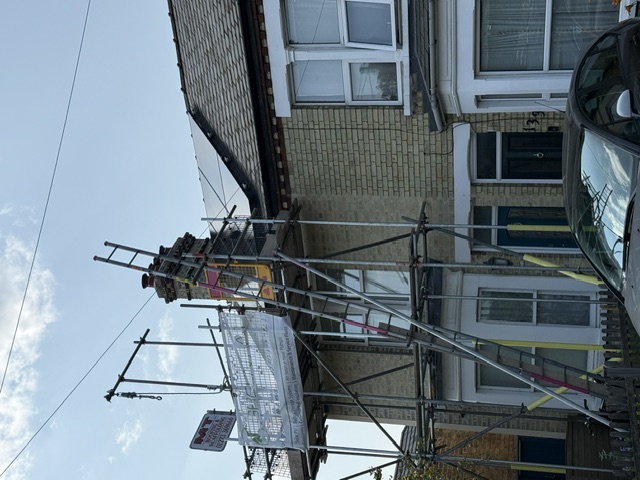
Solar panels on Teesside are no longer a novelty. Five years ago, a photovoltaic array on a semi-detached in Stockton or a warehouse roof in Middlesbrough would have drawn curious glances. Today, they are an unremarkable feature of the landscape, and the economics behind them have shifted in ways that make 2026 arguably the most compelling year yet to install. The changes introduced to the ECO4 scheme in late 2024 and through 2025 had a disruptive effect on households that had been waiting for grant support, but the dust is settling, and for many Teesside homeowners the self-funded route now makes clear financial sense. Across the country, installers in every region are reporting a surge in enquiries from people who have stopped waiting for government subsidy and are acting on payback calculations alone. Hampshire installer Solent Solar, operating in one of the UK's highest-irradiance zones, has noted that a typical four-bedroom household in their area now achieves payback in under eight years without any grant contribution — a benchmark that focuses the mind when you look at what Teesside can realistically expect.
This guide is aimed at homeowners and business owners on Teesside who want a clear-eyed account of the 2026 solar market: what the recent policy changes actually mean, what battery storage adds to the equation, how the North East compares to other regions, and what to look for when choosing an installer.
What the ECO4 Shake-Up Actually Meant for Teesside Homeowners
The Energy Company Obligation (ECO4) scheme, which ran in its original form until mid-2025, provided free or heavily subsidised solar installations to households in lower council tax bands and specific income brackets. The North East historically had a high take-up rate under ECO4, partly because the region carries a larger proportion of older, poorly insulated housing stock and partly because household incomes are, on average, lower than in the South East. When the scheme was restructured — with eligibility criteria tightened, the list of qualifying measures narrowed, and the total funding pot reduced — a significant number of Teesside households who had been on waiting lists found themselves no longer eligible.
The practical fallout was twofold. First, some installers who had built their business models around ECO4 referrals had to pivot quickly. A few smaller operations in the region struggled, which temporarily reduced local installer capacity. Second, households that had been queuing for a grant-funded install had to reassess. For those who did the sums properly, many found that the numbers still worked on a self-funded basis, particularly given that energy prices remain well above their pre-2022 levels and the 0% VAT rate on solar installations — which is not a temporary measure — provides an immediate saving of around 20% compared to what the consumer would have paid before 2022.
The households that genuinely cannot afford a self-funded install remain in a difficult position. Some local authorities in Tees Valley have explored supplementary schemes, and the Warm Homes Plan announced in 2025 contains provisions that may assist lower-income households over the next three years, though the delivery timeline remains uncertain. For those with savings or access to a green finance product, the calculation is more straightforward: at current electricity prices, a well-specified 4kW system on a south-facing roof can generate savings of £900 to £1,200 per year, and with battery storage that figure rises further.
Battery Storage Economics on Teesside in 2026
Battery storage has moved from being an optional extra to a near-essential component of a solar installation in 2026, and Teesside is no exception. The reason is export rates. The Smart Export Guarantee (SEG) pays households for electricity fed back to the grid, but the rates on offer from most suppliers remain well below the import rate. Storing surplus generation and using it in the evening — when demand is highest and the sun has set — recovers considerably more value per kilowatt-hour than exporting it.
The most commonly installed battery capacity on a domestic Teesside property is currently between 5kWh and 10kWh. A 10kWh battery paired with a 4kW solar array is capable of covering the majority of evening consumption for a typical three or four-bedroom home, and with intelligent time-of-use tariff management, the same battery can be topped up from the grid overnight at off-peak rates, further reducing the overall electricity bill. The GivEnergy 9.5kWh unit and the Tesla Powerwall 3 are the two most frequently specified products in the region, though several manufacturers have released competitive alternatives in the past 18 months.
Battery costs have continued to fall. The installed cost of a 10kWh lithium iron phosphate (LFP) battery in the North East currently sits at between £4,500 and £6,500 depending on manufacturer, integration complexity, and whether it is paired with a new inverter or retrofitted to an existing system. Hertfordshire battery specialists Sola UK publish detailed performance modelling for LFP systems across different UK climate zones, and their data consistently shows that the North of England, despite lower irradiance than the South, achieves strong returns on battery investment because of the region's high grid import rates and the flatter seasonal solar curve that allows reasonable year-round generation.
For those considering a retrofit — adding storage to an existing solar system installed several years ago — compatibility is the first question to address. Older string inverter systems may require an additional hybrid inverter, which adds cost. Newer systems with AC-coupled storage options are considerably simpler to expand. An experienced local installer should conduct a full compatibility assessment before specifying the battery.
Commercial Solar on Teesside: Industrial Estates and Manufacturing
The commercial solar market on Teesside has developed faster than many observers expected, driven by three converging factors: energy-intensive manufacturing operations seeking to hedge against grid price volatility, the availability of large, flat or gently pitched industrial roofs, and the Corporation Tax advantages available through the Annual Investment Allowance (AIA) and the recently extended first-year allowance for qualifying plant and machinery.
Industrial estates along the A66 corridor, around Middlesbrough, and in the south of Stockton have seen a meaningful number of commercial installations in the past two years. Typical system sizes range from 50kW on a smaller manufacturing unit to 500kW or more on a large logistics facility. At 100kW, the installed cost on a commercial project in the North East typically falls in the range of £70,000 to £90,000 before tax relief, with an annual electricity saving that can exceed £30,000 depending on the site's consumption profile and whether battery storage is incorporated.
The Teesworks site — the former SSI UK steelworks at Redcar — has attracted interest as a location for large-scale ground-mounted solar as part of its wider development as a clean energy hub, though the planning and grid connection process for utility-scale projects of that type operates on a different timeline to commercial rooftop installations. For most businesses on Teesside, a rooftop installation on their own premises remains the most practical and financially straightforward entry point.
Commercial buyers should be aware that the business rates exemption for solar installations on commercial properties — which had been due to expire — was extended in the 2025 Autumn Statement and currently applies to systems installed before April 2027. This exemption means that a rooftop solar array does not increase the rateable value of the property, removing a disincentive that had previously given some commercial owners pause.
How the North East Compares to Yorkshire and National Averages
A common question from Teesside homeowners is whether the region's climate makes solar less worthwhile than in the South. The honest answer is that it reduces the output but does not undermine the case. The UK average peak sun hours (PSH) figure used for solar modelling is approximately 2.7 to 3.0 hours per day on an annualised basis. Teesside and the wider North East sit at roughly 2.5 to 2.7 PSH, which is meaningfully lower than Hampshire or Cornwall (3.2 to 3.6 PSH) but not as dramatic a difference as many assume.
A 4kW system in Hampshire might generate around 3,600kWh per year. The same system on a south-facing roof on Teesside would produce approximately 3,100 to 3,300kWh — a reduction of 8 to 14%. Given that electricity prices apply equally across the country, the financial return is proportionally lower but still positive. When the comparison is made to a region like Yorkshire, the gap narrows further. York-based YEERS have published performance data from their installed base showing that South Yorkshire properties achieve annual generation figures within 5 to 8% of North East equivalents on comparable roof configurations.
Where the North East does face a distinct challenge is in roof orientation. The region has a higher proportion of terraced housing with north-south aligned streets, meaning a significant share of the housing stock has east or west-facing principal roof slopes rather than south-facing ones. East-west configurations produce less energy overall but generate more evenly across the morning and afternoon, which can actually reduce the mismatch between generation and consumption. An experienced installer will model the actual orientation and inclination of your specific roof rather than using national average assumptions.
Choosing a Teesside Installer: What to Check
The installer landscape in the North East improved substantially between 2022 and 2025, as higher demand attracted new entrants and prompted existing electrical contractors to add solar competencies. The MCS (Microgeneration Certification Scheme) accreditation remains the non-negotiable baseline. Without it, a domestic installation does not qualify for Smart Export Guarantee payments, and most green finance products require MCS certification as a condition of lending. Any installer who offers to proceed without MCS certification should be avoided entirely.
Beyond MCS, the questions worth asking cover design methodology, product sourcing, and post-installation support. A reputable installer will conduct a site survey — ideally in person rather than by satellite imagery alone — and will provide a shading analysis using dedicated software rather than a visual estimate. They should be able to specify the exact panel model and inverter, explain why those products have been chosen for your property, and provide the manufacturer datasheets. Beware of any installer who is vague about product specifications or who pressures you to sign before a survey has taken place.
Warranty terms deserve careful scrutiny. Panels typically carry a 25-year performance warranty, but the value of that warranty depends entirely on whether the manufacturer will still be solvent and operating in 25 years. Installers working with established tier-one manufacturers — Jinko, LONGi, REC, Trina — are generally safer bets than those sourcing from lesser-known brands at lower cost. Inverter warranties have extended in recent years: five years is now a minimum, and ten-year inverter warranties are available from several manufacturers.
It is also worth looking at how installers in other parts of the country approach quality assurance as a benchmark. Carbon Legacy in Nottinghamshire and D&R Energy in Bristol are examples of regional installers that publish detailed case studies, include shading analysis in their proposals as standard, and offer multi-year maintenance agreements — practices that indicate a professional operation rather than one chasing volume at the expense of quality. When evaluating a Teesside installer, ask whether they offer comparable transparency and post-installation support.
Getting Started with ALPS Electrical
ALPS Electrical is a Teesside-based MCS-accredited installer serving residential and commercial customers across the Tees Valley, including Middlesbrough, Stockton-on-Tees, Hartlepool, Redcar, and the surrounding areas. The company offers solar panel installation, battery storage, EV charging infrastructure, and integrated energy systems designed to work together rather than as standalone products.
The starting point for any project is a no-obligation site survey, during which the team assesses roof condition, orientation, shading, existing electrical infrastructure, and consumption patterns. From that survey, a detailed proposal is produced that includes projected annual generation, estimated savings at current tariff rates, payback period, and — where battery storage is being considered — a breakdown of the additional return from self-consumption versus export.
For commercial customers, ALPS Electrical can also assist with the tax relief calculations and provide documentation suitable for accountancy purposes, as well as coordinating with DNOs (Distribution Network Operators) on grid connection notifications, which are required for systems above 3.68kW single-phase or 11kW three-phase.
Teesside's solar market in 2026 is more mature, more competitive, and better value than it has ever been. The ECO4 changes were disruptive, but for the majority of homeowners and businesses the fundamental case for installation has strengthened. The combination of persistent high energy prices, falling hardware costs, and improved battery technology means that the question is less often "should I install?" and more often "how do I choose the right installer and specification?" ALPS Electrical is well placed to help answer both.
Continue Reading
Get Expert Advice
Have questions about any of the topics covered in this article? Our team is happy to provide personalised advice for your specific property and situation.
Book a Free Survey